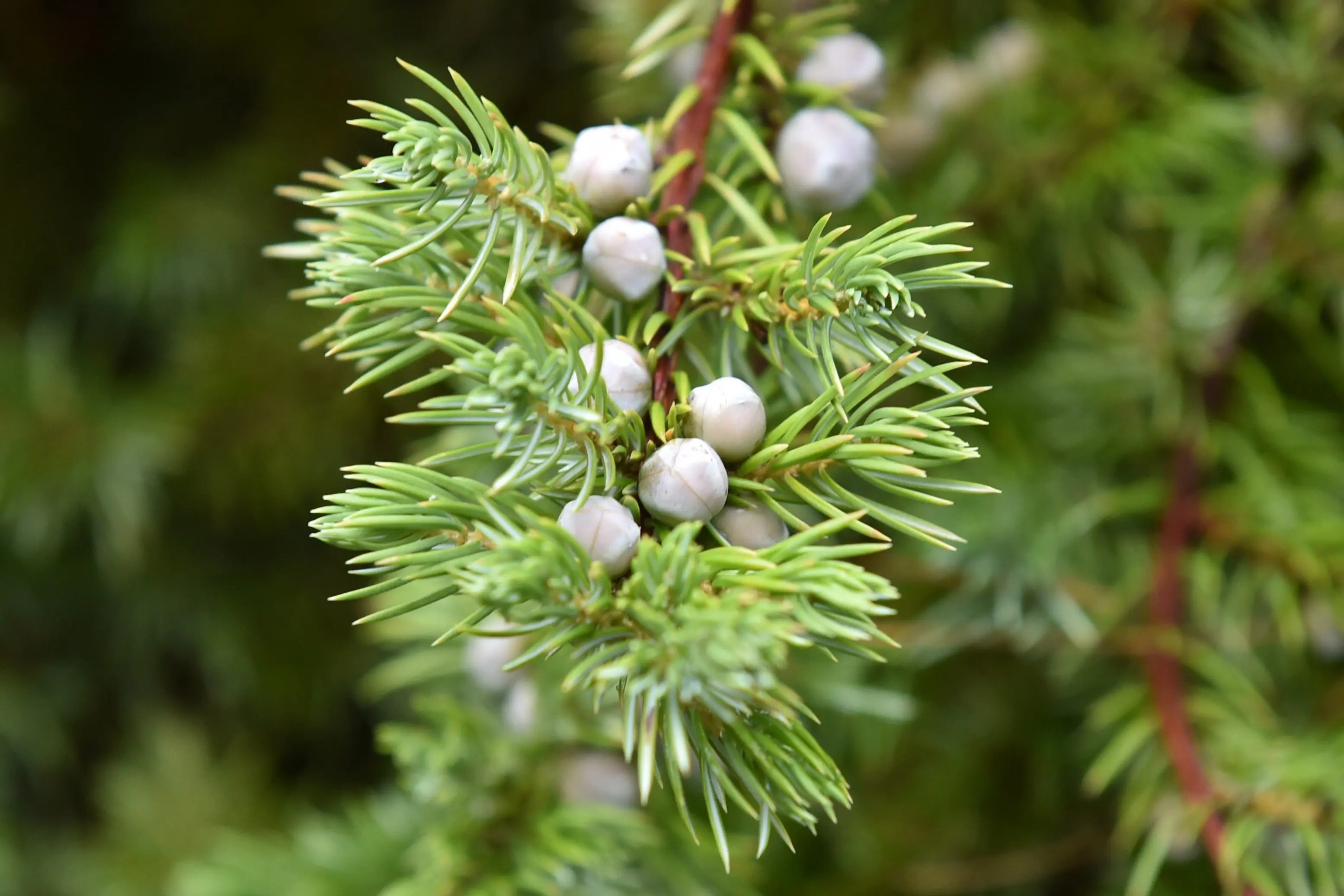
Conifers can be confusing and difficult to identify, especially within a plant family. The cypress family, Cupressaceae, can be befuddling as many of the genera have similar scale-like, overlapping leaves — these include Thuja, Cupressus, Chamaecyparis and Juniperus. It is not until you spot a seed cone that the pieces fall into place, as each genus is distinctly different. Conifers produce two types of cones: the male pollen cone, which is long like a catkin, and the more traditional-looking female cone, which contains the seed. It is the seed cone which can be an important identifying feature. Cupressus seed cones are wooden-looking and round. A good example is macrocarpa, which most of you will have used as a missile at some point in your childhood. Chamaecyparis, for example Lawson’s cypress, are also round but much smaller than Cupressus. Cone scale segments are reasonably uniform and arranged like a tiny soccer ball. Thuja seed cones are oblong with each scale ending in a point. When they ripen, they flare out like a tiny wooden flower. Juniperus cones look more like a berry as they are fleshy and round. Juniper berries have a distinctive flavour and are well known by chefs and gin makers — however as with all foraging, care must be taken that you get the right species as some have toxic qualities. There are conifers scattered throughout the collections at Dunedin Botanic Garden, with many species planted in the conifer cultivar collection above the rock garden and through the arboretum.