It can be a long and winding road on the way to fine-wine appreciation, writes Jeff Kavanagh. But someone has to do it.
Swanning around with a glass of wine mid-morning is not something I'd normally do, particularly if I'm required to drive afterwards. But here I am, in a corrugated-iron tractor shed adorned with polished wood and a sunny little terrace on the main road between Alexandra and Clyde, a glass of chilled pinot gris in my hand. There's not a huge amount of wine in the glass, but that doesn't matter as I'm not planning to drink it anyway. Instead, somewhat self-consciously, I swirl, sniff, sip, slurp, and then counterintuitively spit it out.
Wine for me, as it probably is for many others, is a bit like art. I know what I like and what I don't, but not much more.
So, in order to expand my horizons, I've decided to spend a few days in Central Otago to learn a bit more about the local wine and to get some tips about what to look for, as well as making some new discoveries.
I'm not sure I'll ever get to the point where I can comfortably admit to detecting notes of white peach and freshly mown lawn, but I'm keen to enhance my appreciation of what I'm imbibing nonetheless.
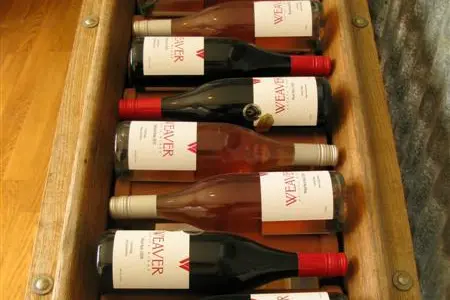
The small, family-run Weaver Estate Wines is my first port of call, and the pinot gris I've just tasted is fresh, fruity, and delicious.
Jess Weaver, the amicable young wine-maker here, tells me it goes well with seafood and summer salads. Convinced, I grab a bottle for later consumption.
From there I drive up the road to Clyde and over the Clutha to Earnscleugh for lunch at The Packing Shed. Once an old orchard building, nowadays it's an eclectic place with a large lawn, retro patio furniture, statues and fruit trees. It's also a lovely spot for a lunch of prawn cakes and salad greens accompanied by a glass of Sam Neill's crisp and fruity Two Paddocks Riesling, grown just down the road.
Watered and fed, I head to my next stop in Earnscleugh, the Three Miners winery. During the short drive the hot mid-December day turns blustery and dust billows across the vines flanking the road. As I drive up the winery's driveway, I see a bloke in a cap on a quad-bike roar after me.
"Bloody hell it's hot," he says as we arrive together outside the tasting room, "Must be time for a drink."
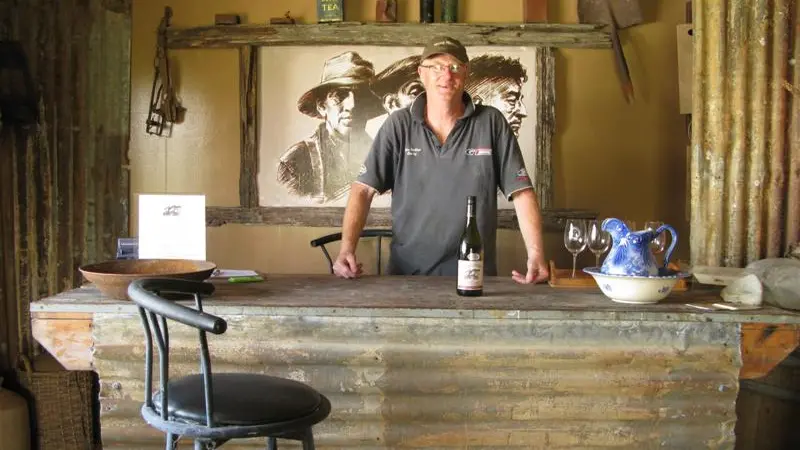
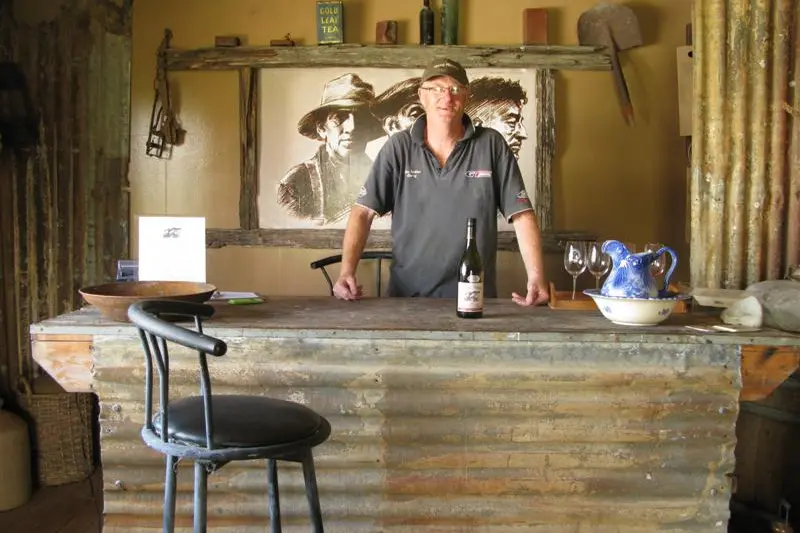
The bloke is Jeff Price, the owner of the vineyard and, once in a room decorated in the style of an old miner's hut, he plonks down four bottles - a pinot gris, gewurztraminer, riesling, and pinot noir - for us to try.
The one-time proprietor of the Owaka fish and chip shop, he's an engaging host, full of anecdotes about how he got into wine-making - on a trip to Queenstown in the '90s, he tasted pinot noir for the first time, fell in love with it and decided to set up a vineyard - and passion for what he does. His own pinot noir is dark, spicy, and incredibly tasty, and I depart with a bottle.
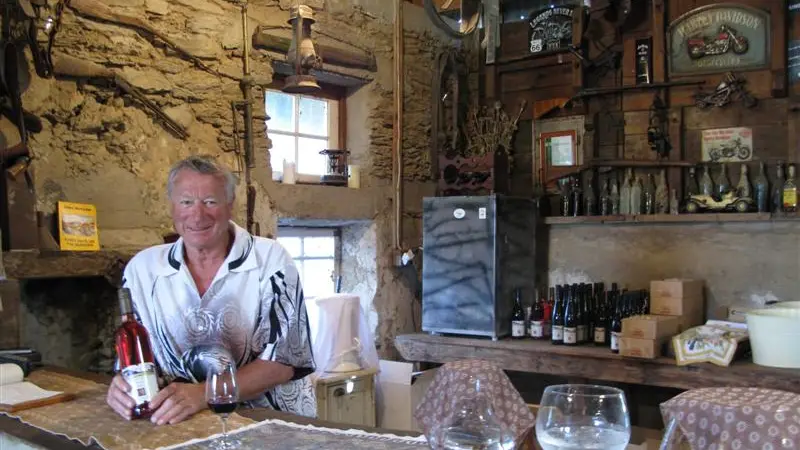
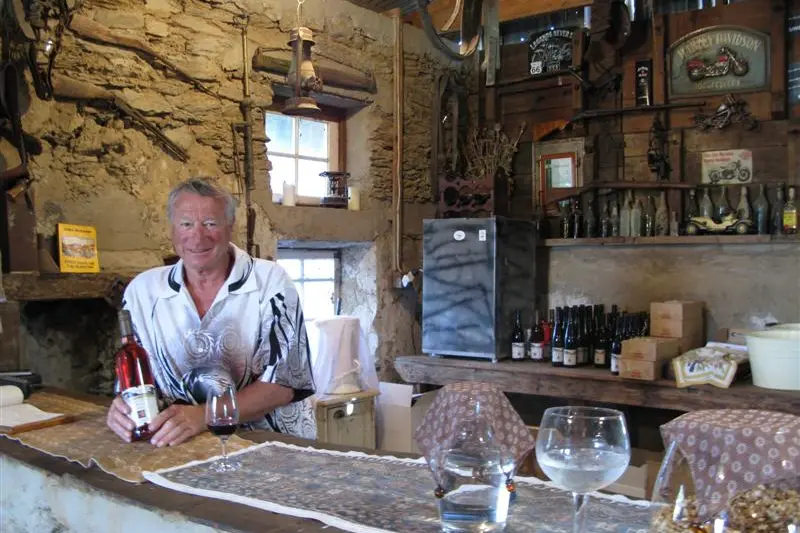
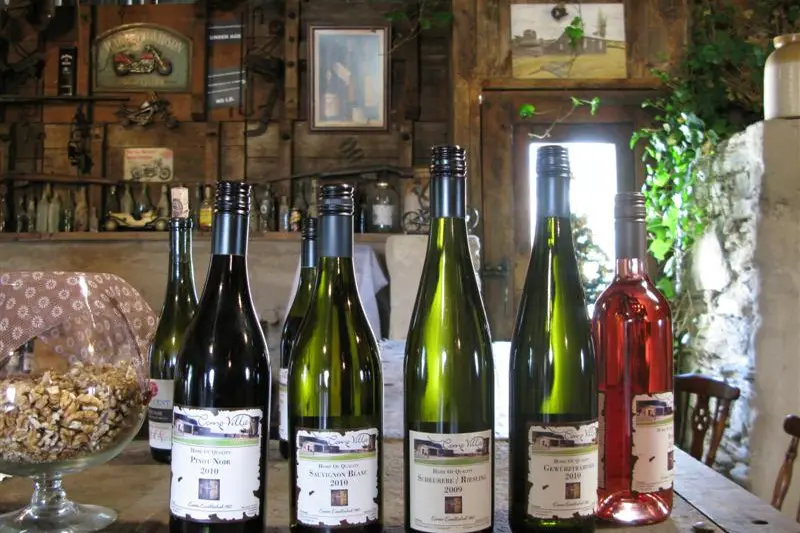
It's only 3.30pm and there's time for one more stop, so I pop into Como Villa Estate, further along Earnscleugh Rd. Formerly a 19th-century house, the winery's capacious tasting room now resembles a museum, decked out with old saddlery, muskets, and bottles found on the property.
It's early in the season and there aren't many other visitors about, so I spend a convivial hour talking to estate owner Johnny Chapman and tasting his wines, including a scheurebe and riesling blend, which I learn is a high-texture white wine with gooseberry and nashi pear notes. Again I leave with a bottle of wine, a very pleasant rosé.
About 20 minutes out of Alexandra, just off the rail trail, is Hawkdun Rise and my lodgings for the night, a luxurious bed and breakfast consisting of three double bedrooms with ensuites and run by warm hosts John and Suzanne Grant.
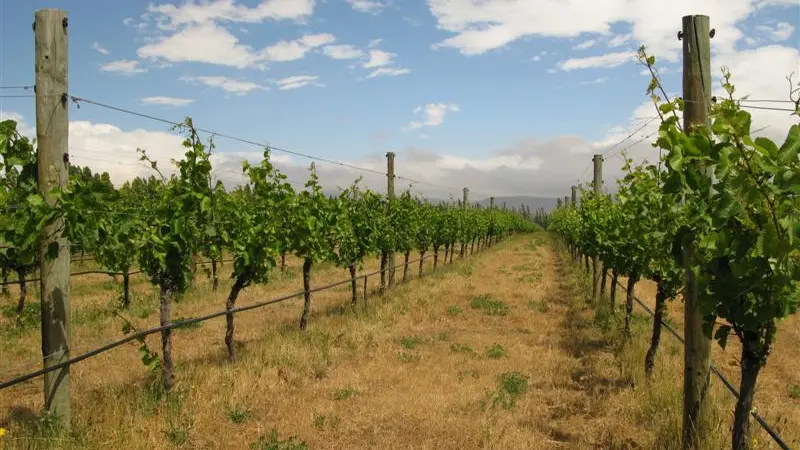
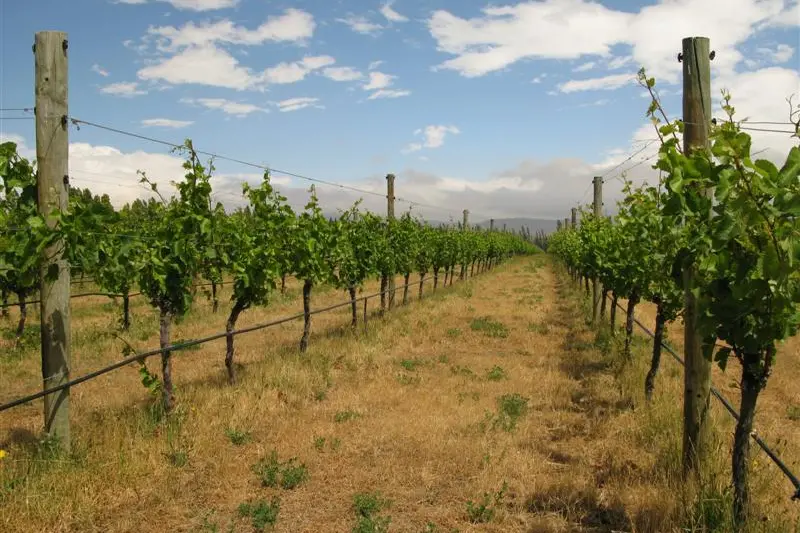
It's hard to think of a better place to stay if you're visiting the area for its wine. On a vineyard with views over hills of golden tussock and schist, it produces its own award-winning wines and also has a spa, in which I happily soak after a barbecued steak and a glass of said wine.
The next morning after some eggs, toast and homemade yoghurt, I drive along Lake Dunstan to Cromwell. The previous day's wind has brought grey skies and a drop in temperature and pulling into Wooing Tree winery, directly across from Cromwell's giant fruit, I'm happy to indulge in a hot coffee, initially at least.
Fortified, I decide to try their award-winning rosé and a rosé dessert wine, Tickled Pink, both of which I discover later go very well with strawberries.
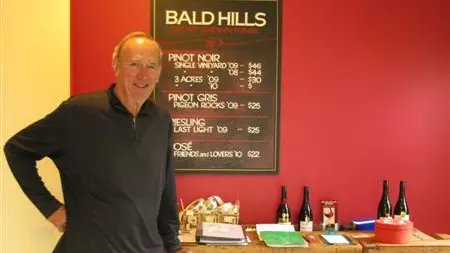
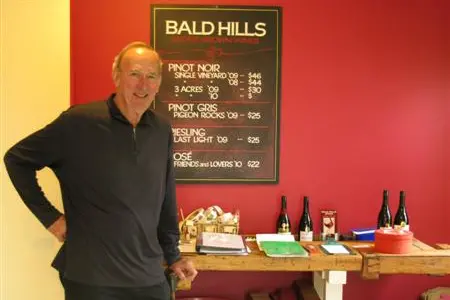
From Wooing Tree, I visit Bald Hills, on the other side the Kawarau River among the gentle hills of Bannockburn. Here I'm entertained by its owner, a silver-haired larger-than-life Australian named Blair Hunt. Introducing himself at first as "Bulla from Fiji" (where he was born) the ex-sugar chemist, lecturer, and chief executive walks me through their pinot noirs, pinot gris, rieslings, and roses and the stack of awards the winery has won, including gold medals from industry publication Decanter magazine.
Impressed, but not quite ready to put my palate through its paces again this morning, I wait until lunch at Mt Difficulty, also in Bannockburn, before putting another glass to my lips.
A highly-respected local winery, Mt Difficulty serves a predictably impressive lunch. Not just for the duck, slow roasted in pinot noir with raspberry and cassis sauce and the accompanying glass of pinot noir, but for the views towards the Pisa and Cairnmuir ranges with the Cromwell Basin nestled in the middle.
It's one of several fine wineries on Felton Rd, including the eponymous Felton Road that I visit later in the day. Felton Road's tasting room is only open between 2pm and 5pm on weekdays. It's a small window, but given the six to 12-month wait to even get on to a buying list to purchase some of Felton Road's wines, it's possibly the best chance many will have to become better acquainted with its products.
Before I get that far down the road, however, I call in at a smaller winery, Gate 20 Two.
Run by ex-Dunedinites Pauline and Nigel McKinlay, Gate 20 Two produces only 300 cases of wine a year (Felton Road produces 40 times that) and its cellar door is more or less the foyer to the family home. It's a cosy and intimate experience, and the McKinlays are welcoming hosts. Their pinot noir's not bad either, its smoothness and blackcurrant notes a nice contrast to the gloomy weather.
That evening, after some wonderfully tasty rabbit and duck terrine and aubergine parmigiana at Cromwell's newly opened Italian restaurant, Armando's Kitchen, I sink contentedly into the armchair of my modern little cottage at Burn Cottage Retreat.
A couple of minutes from Cromwell and set in a walnut grove in a quiet valley, it's an ideal spot for a night or two of peace and quiet.
I reflect on my two days' sensory excesses, the smells and tastes and the rich living I've enjoyed. Five bottles of wine I've picked up along the way stand on the kitchen counter and, while I'm still no connoisseur, nor will I be waxing lyrical any time soon about their complexities or the robustness of their structures, I'm happy to have a better understanding of why I like them.
• Most wineries' cellar doors are open from mid-morning to early evening throughout the year, although some have limited hours or are closed during the colder months.
Tasting is generally free, but some wineries ask for a gold coin donation if you decide not to purchase a bottle.
• Jeff Kavanagh is a Dunedin travel writer.