In a wealthy town house, we revealed tessera by tessera the complete scene of a lion holding in its jaws the severed head of a red deer. On another occasion, it was a Roman villa at Bignor where the Roman owners walked on a series of fine mosaic floors 1600 years ago.
During the Covid outbreak in 2020, Jim Irvine took a walk across his family farm in the county of Rutland and noticed a scatter of oyster shells. The farm at Ketton is a long way from Colchester, the source of Romano-British oysters so, his interest piqued, he took a spade and dug down to find out more.
Surprisingly close to the surface, he struck archaeological gold, an intact mosaic floor.
Examination of air photos combined with ground penetrating radar, deployed by Leicester University archaeologists, soon revealed the plan of a Roman villa, and excavations were set in train. The results have just been published and described as "one of the most remarkable Roman discoveries in Britain for a century".
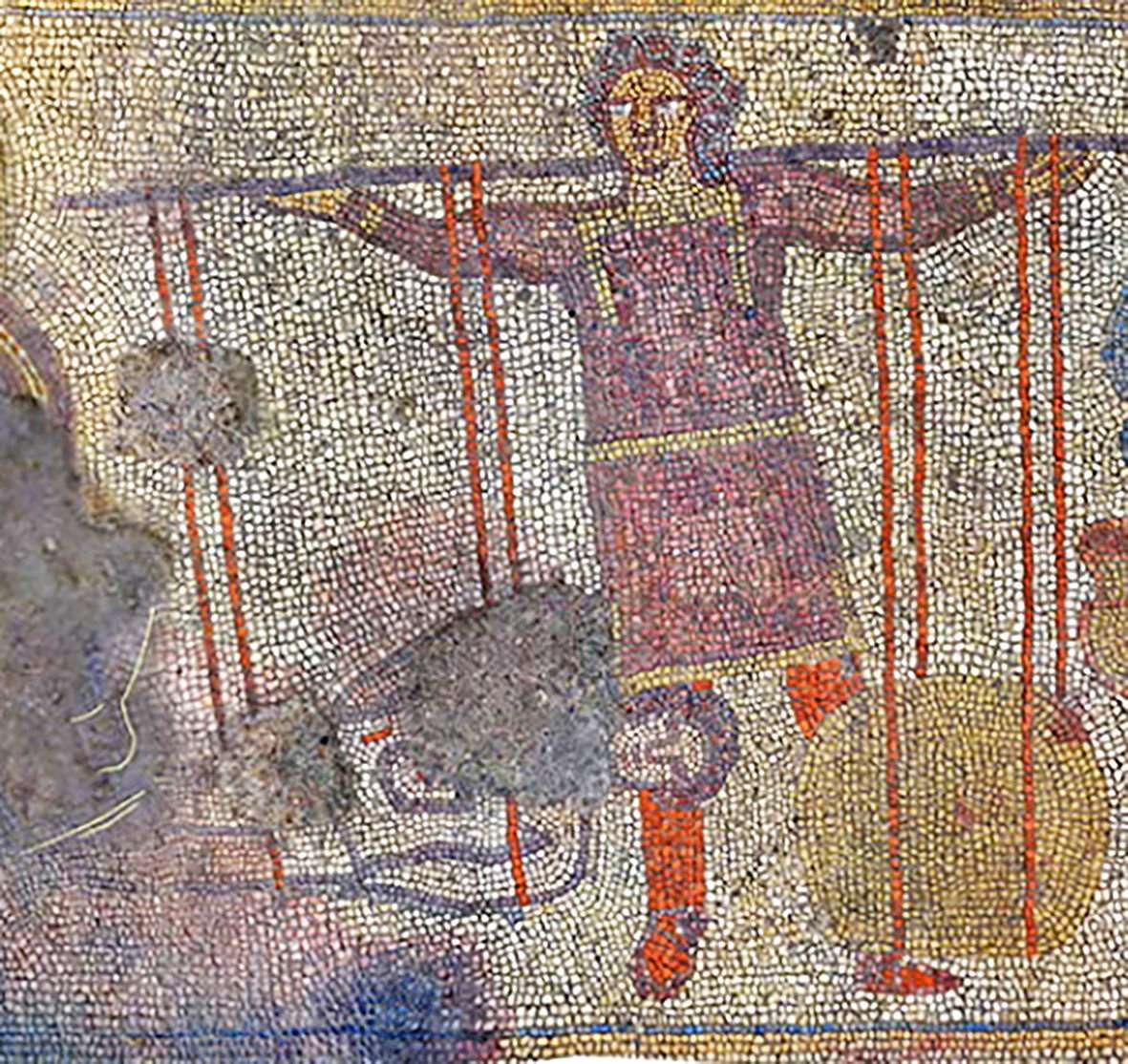
The mosaic had been laid out in the villa’s dining room, and consists of three panels, like a newsreel, depicting a conflict that took place during the Trojan War.
Troy is a great place to visit, on its hill overlooking a plain flanking the southern shore of the Dardanelles. Standing there one can easily conjure up a view of the thousand ships under the command of Agamemnon as he came in search of Helen.
For years, as Homer recounts, there was a series of epic clashes and hand to hand combats, as between Achilles and Hector, the crown prince of Troy and son of King Priam.
The history of the Trojan wars, culminating in the wooden horse being dragged through the gate of Troy, has come down to us through the Homeric saga. However, the three panels at Ketton are based on a different and little known version, the Phrygians, by Aeschylus, the Athenian playwright in the 5th century BC. In this sequence, we first see the two combatants duelling, then the death of Hector and, finally, his body being weighed against sufficient gold for Priam to ransom its return.