
PHOTO
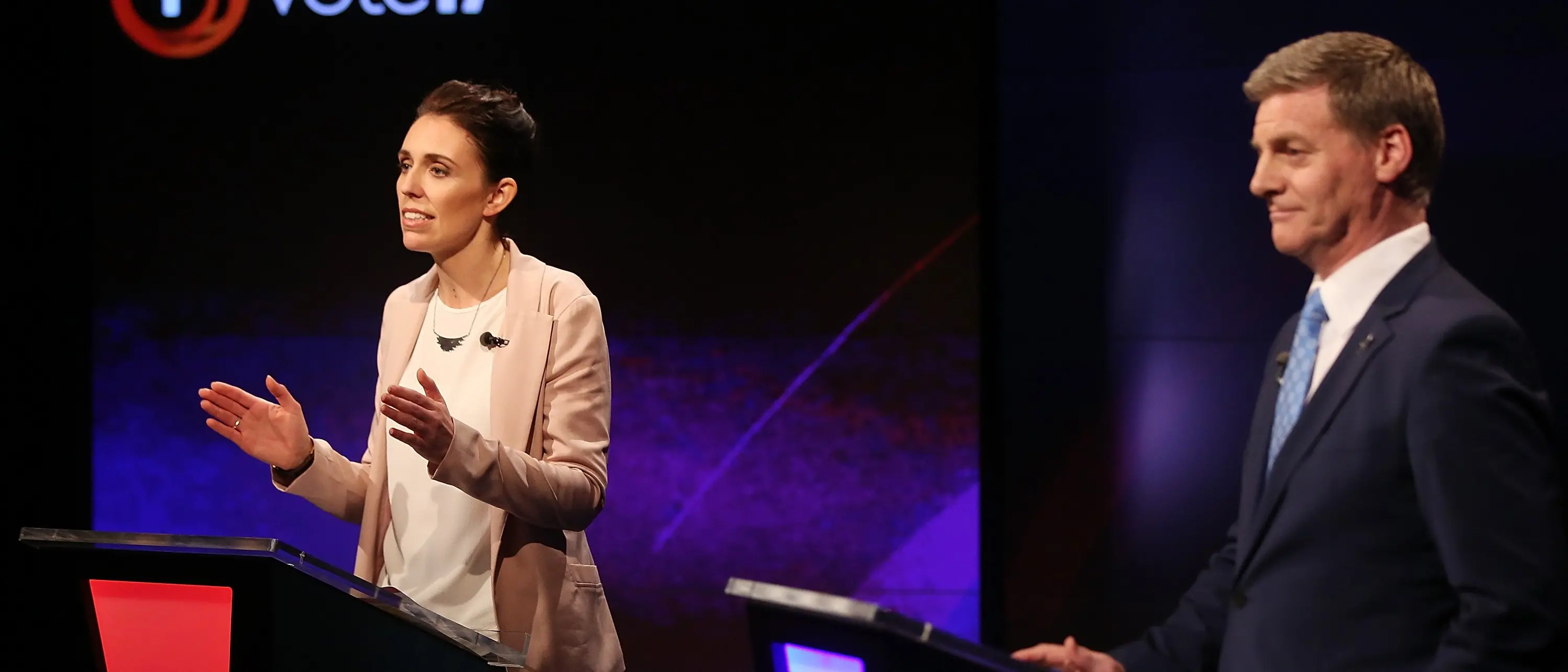
Prime Minister Bill English and Labour leader Jacinda Ardern last night sparked up an already intriguing election contest of ideas and aspirations.
There was no escaping the latest poll results during the first TVNZ1 leaders debate, moderated by broadcaster Mike Hosking who, after welcoming the two leaders asked Mr English: "Why are you losing?"

The latest The 1News Colmar Brunton poll last night showed Labour had risen 6 points to 43%, and National had fallen three points to 41%. That puts Labour at its highest point since 2006 and National at its lowest since 2005.
Mr English did not accept his party was losing, saying the latest results were out of line with his own party’s polling, though he would not reveal those figures.
Ms Ardern was clearly carrying poll momentum into the debate. She had polled above Mr English in the preferred prime minister stakes with 34% compared with 33%.
New Zealand First leader Winston Peters, who is still considered to be the most likely person either Mr English or Ms Ardern will turn to to form a government after September 23, was down 3 points to 4%, and his party down 2 points to 8%.
Mr English called the election a "drag race" between the two parties, trying to draw away from the minor parties, such as NZ First and the Greens.
For her part, Ms Ardern said she was happy with the result but in no way did she consider the election a "done deal" right now.
"I am not taking anything for granted."
Under questioning from Mr Hosking, Ms Ardern confirmed her first call would still be to the Green Party, with whom Labour has a memorandum of understanding, but emphasised the final decision was in the hands of the voters.
For someone only four weeks into the Labour leadership, Ms Ardern performed well, although she was short on detail. Instead, her supporters got exactly what they were looking for: hope, values, aspiration and the voice of someone wanting to better the lives of the poor, the migrants, the young and the homeless.
Mr English is not going to go down without a fight, however. He gave his best and looked calm, animated, and sometimes had a bit of fire as he hit back against both the moderator’s questions and criticism from Ms Ardern.
His line "People can’t go shopping on your values" was a ripper.
He talked over the top of Ms Ardern, something she was not prepared to reciprocate. Both were civil to each other and Ms Ardern proved gracious in her handling of hostile questioning.
Mr English looked genuine in his answers about housing, training young people and the benefits meat workers would get from National’s tax cuts.
Ms Ardern got her own one-liner in when Mr English was talking about helping young people, especially Maori on the East Coast, into learning about work and keeping working.
"I am pleased they are not ‘pretty dumb and hopeless’ now," she said in reference to an remark made earlier in the year by Mr English.
What let Ms Ardern down was her lack of detail on tax issues, referring instead to the working party that would be formed by a Labour-led government.
Mr Hosking hammered her on the water tax, to which she had no answer.Mr English clearly won the round on taxation. He reiterated "ordinary" New Zealanders would lose $1000 a year if Labour cancelled the planned cuts to pay for the education of lawyers, accountants and doctors.
Ms Ardern took more of the speaking time, but was interrupted often by Mr Hosking as he probed for definitive answers from the new leader.
Pushed on the fair pay reform, she gave a strong answer of there not being the likelihood of more strikes under Labour’s policy.
Mr English accused Labour of turning industrial relations back to the 1970s when trade unions ruled supreme.
At the end of the debate, the two leaders got to say what their elevation from deputy to leader had shown them about themselves.
Mr English said it had made him care more about turning the economy into results for the public.
Ms Ardern said it had taught her how much she could do with one day, and how much one could do with good instincts and a clear set of values to fall back on. She had to change nothing in her own values to be Labour leader.