

PHOTO
A father who lost twin sons who were then buried in an unmarked grave broke down in tears at a memorial in a Southland cemetery.
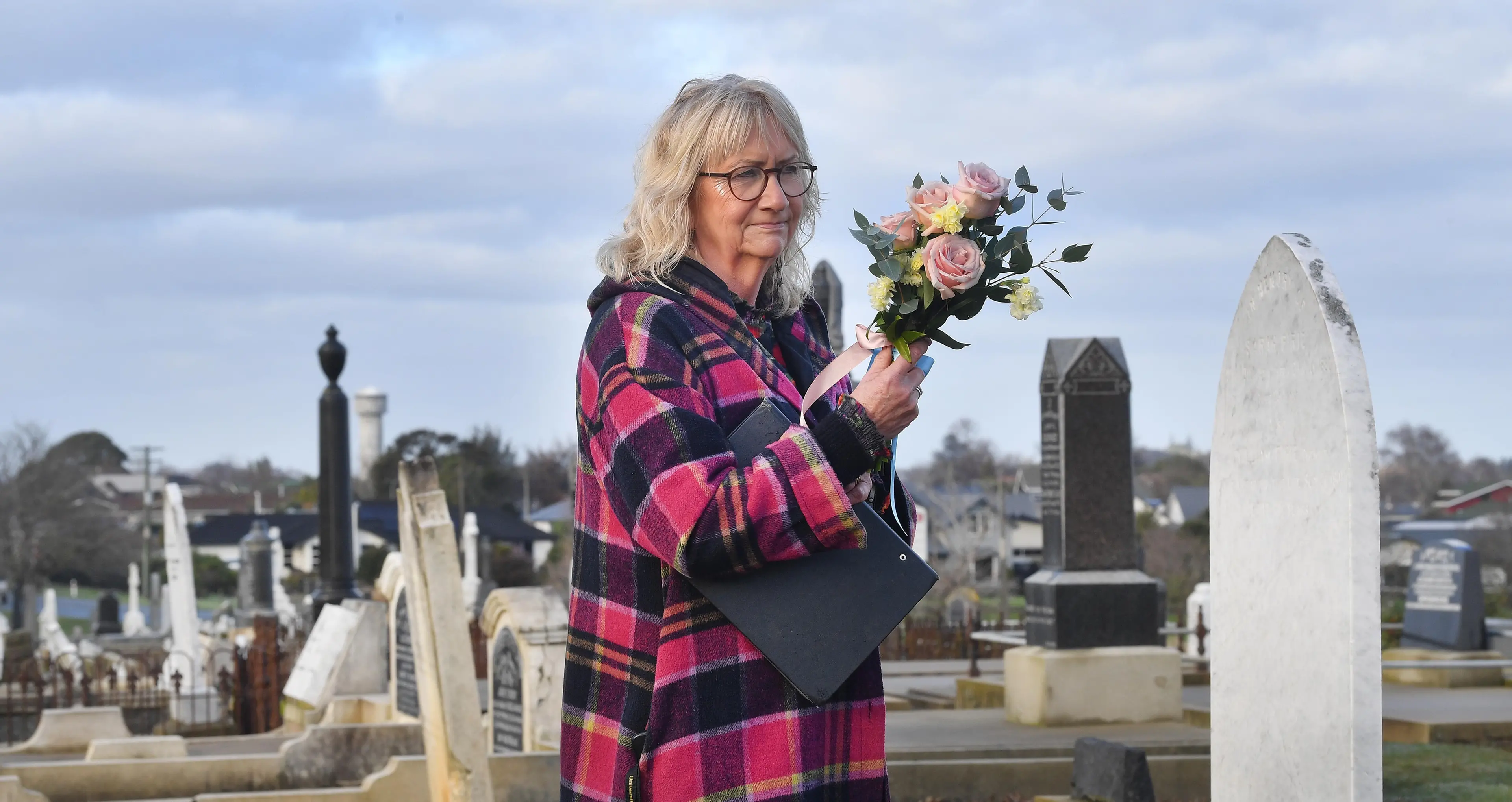
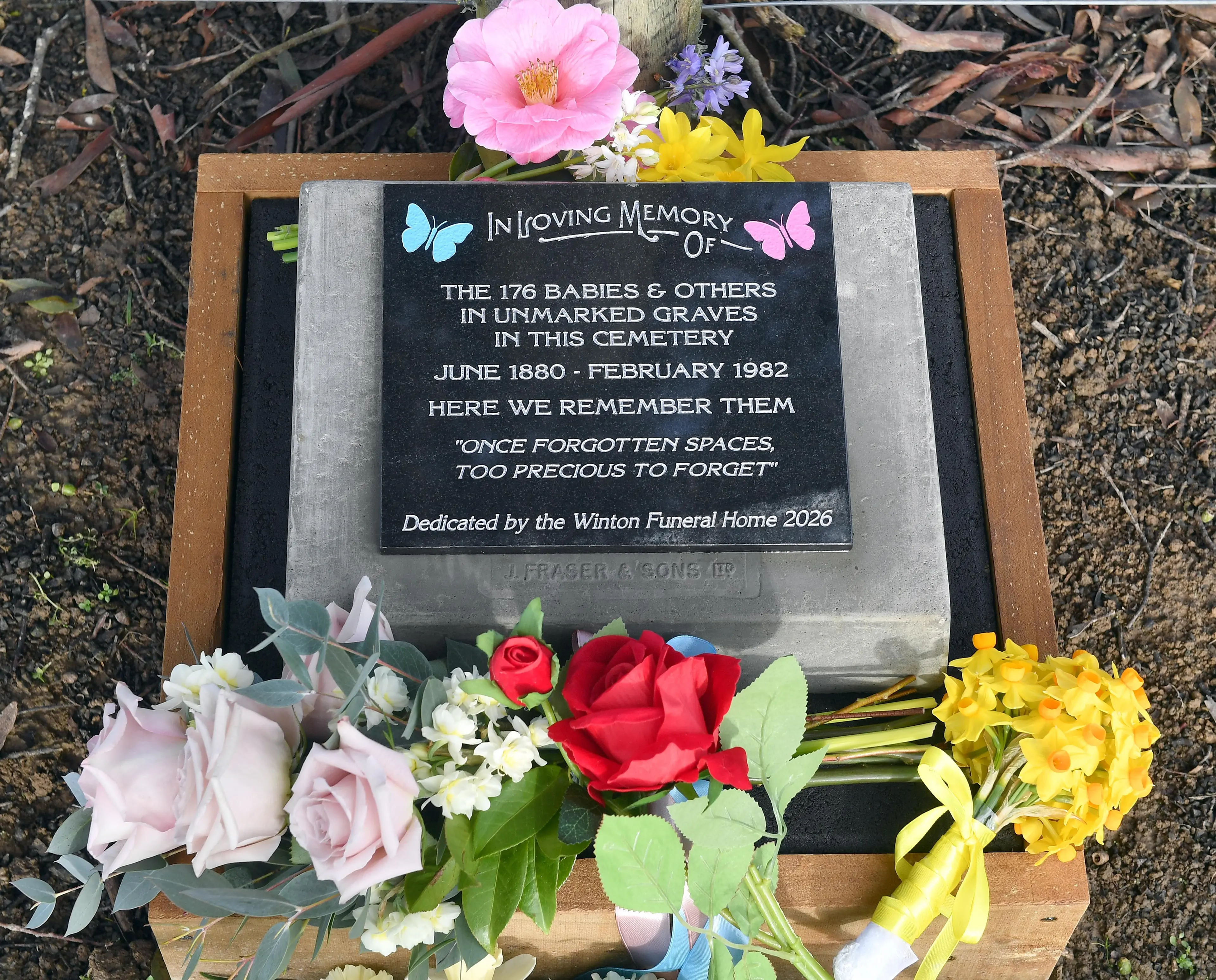
The memorial and unveiling of a plaque at Winton Cemetery on Wednesday was led by funeral director Sally Tily after she discovered it was home to 176 unmarked graves, the majority of which belonged to babies.
She said the babies and their families needed recognition and closure.
“I’ve had the privilege of having my own children and grandchildren. I’d just be devastated if I lost one of them.
“You’ve got to have that closure and recognition that they existed in the first place — they had to have existed to be buried.”
After finding out about the unmarked graves, she was given a list from the Southland District Council which had the year, date and initials of the people that were spoken to when the baby was taken away.
Doing some research, she discovered babies and infants had been buried there since 1880,. The last were twin boys on February 9, 1982.
After the plaque was unveiled, she spoke to the father of the twins who said the council told him he could not bury them in the cemetery, they had to go into an unmarked grave.
“He broke down in tears,” she said, also noting he was grateful to finally have recognition.
She acknowledged the possibility that some of the dead could be connected to Minnie Dean, the notorious baby killer — the only woman to be hanged in New Zealand.
“Who would know where those babies went? They had to be buried somewhere and there’s infants here, not just the babies.”
Dean is also buried at the cemetery, along with her husband.
Ms Tily discovered the unmarked graves through an old colleague, and years later decided to investigate.
“I got a hold of the Southland District Council and they sent me a map and told us they were here — sadly there are other babies and infants that are buried in amongst the other graves.”
The babies and infants were either stillborn or died shortly after birth — the clinical theory of the time was to take away the child before the mother could see or hold them to reduce grief.
“Some of them didn’t even know they were buried here. I’ve had two people contact me recently and they found out their babies are here.”
For those mothers, this plaque being installed was closure, she said.
”It’s been a long journey, couple years … we had to make sure that we were following the guidelines.”
She said she had a list of names and welcomed people to reach out so she could let them know if their baby was buried in the cemetery.
tayler.mutton@odt.co.nz