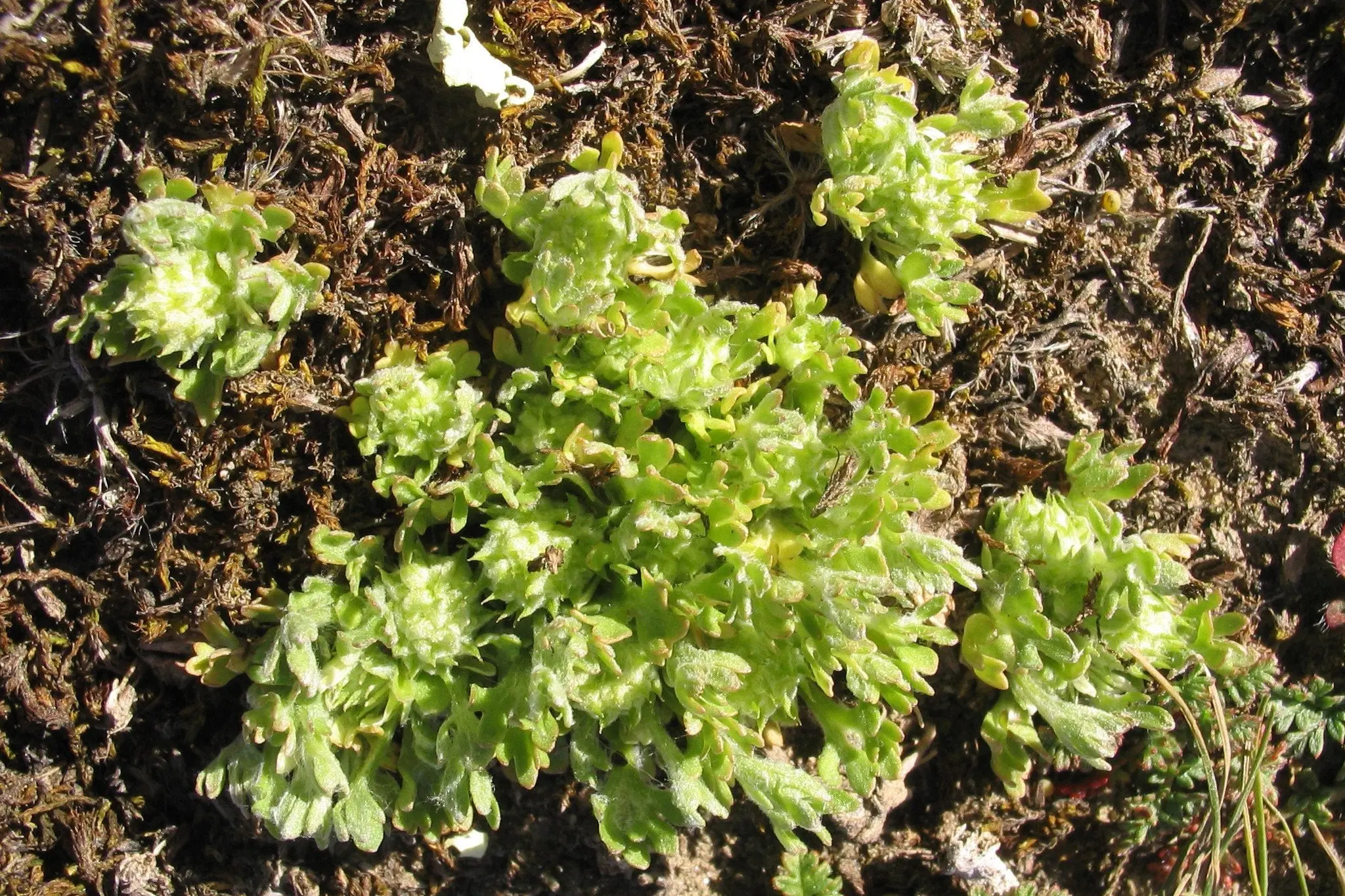
The proposed Santana Gold mine would disturb the largest population of an irreplaceable nationally threatened critical plant species, it has been claimed. The Department of Conservation has backed the findings made by an Otago Regional Council ecologist earlier this week. Council ecologist Trudy Anderson had said in a memorandum to the gold mine fast-track panel earlier this week survey results indicated the population and distribution of the three spring annuals species were likely to be greater than indicated in initial surveys provided by the applicant. Survey records showed the highest concentrations of spring annuals Ceratocephala pungens (threatened-nationally critical), Myosurus minimus (at risk-declining), and Myosotis brevis (threatened-nationally vulnerable) were located within the project’s direct disturbance footprint. Spring annuals are plants that complete their life cycle in one season and burst into colour as the weather warms up. Doc’s vegetation and flora independent consultant Max Crowe said in a report to the fast-track panel the 2025 spring annual survey results indicated the highest-value populations of the most threatened spring annual species C. pungens, in terms of both population size and density, were concentrated in areas proposed for revocation of protection and direct disturbance. Mr Crowe said none of the search effort in 2024 or 2025 occurred within the 5500ha Bendigo Conservation Covenant outside the proposed revocation area. “Based on the current evidence, the revocation would result in the loss of legal protection for the only significant concentration of a nationally critical species known within the Bendigo Conservation Covenant, and almost certainly the largest known and highest-density populations of the species anywhere.” Mr Crowe said nearly 1400ha of additional habitat of potentially very high conservation value had been identified for further survey this year, including 144ha within the disturbance footprint, 330ha within the Ardgour Restoration Area, and 881ha on nearby privately owned land. “It is considered highly likely that further survey will detect additional populations of these species both inside and outside the disturbance footprint.” The 1400ha needed to be surveyed, and given the time constraints in reporting back to the panel it needed to be undertaken as soon as possible using appropriately qualified and experienced field staff. Mr Crowe said the 2025 survey materially changed the evidential basis for assessing effects on spring annual species. The proposed disturbance footprint and the proposed covenant revocation area contains almost certainly the largest population of a threatened-nationally critical plant species within substantial concentrations of threatened spring annual flora. He said all of this population was assessed as subject to the highest possible level of adverse effects. “For Ceratocephala pungens, a species already on the brink of extinction, the loss of the largest known population would further increase extinction risk. “These threatened species and their habitats are irreplaceable, and the effects of the proposal are irreversible. It is not possible to offset or compensate for these effects, and the impacts should, therefore, be avoided.” He said the panel should treat the residual uncertainty as relevant to the scale of direct and indirect effects, the adequacy of proposed offsetting and compensation, and the conservation consequences of covenant revocation. Santana Minerals is busy going through workshops over conditions for its consents for the gold mine in Bendgio. The workshops will wrap up near the end of this month and a suite of consent conditions should be presented to the panel on August 28.