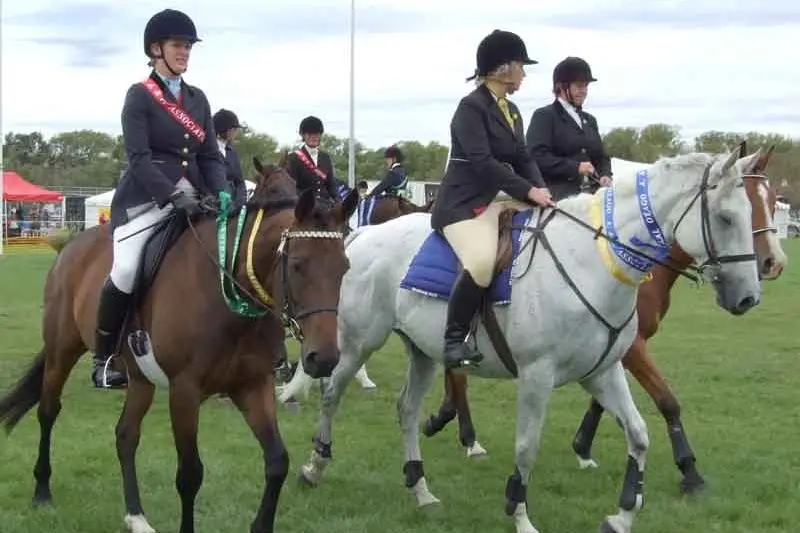
The Ministry for Primary Industries (MPI) has been seeking feedback on four options to improve equine identification and traceability. It wants to improve New Zealand’s ability to respond quickly and effectively to equine disease outbreaks to minimise the impact on the equine population and economy. The proposed options aim to: strengthen biosecurity preparedness of our equine sector against potential equine disease incursion or outbreaks provide consistent data requirements for equine identification and traceability across the equine sector and support some trade, exports and international movement of equines. Consultation opened on June 15 and closed on July 28. What’s being proposed? All proposed options, apart from the status quo, would involve developing regulations under the Biosecurity Act 1993. Option 1: Status quo — continue voluntary participation in the National Equine Identification and Traceability (NEIT) System — a national equine identification register that uses microchips as the primary identifier. Option 2: Director-General exemptions — mandatory participation with some exemptions decided by the Director-General of MPI. Option 3: Targeted approach — mandatory herd registry for all equines, and microchipping for higher-risk equines. Option 4: Full mandatory participation — all domestic equines registered and microchipped. An equine is an animal that is a member of the horse family Equidae, which includes horses, donkeys, mules and zebras. Horses are the most common equines in New Zealand. New Zealand’s equine sector includes various industries, such as thoroughbred and standardbred racing, breeding of equines, equestrian sports (such as dressage and show jumping), donkey and mule show events, utility/farm equines (such as stationbreds), recreational riding and commercial tourism businesses. New Zealand also has populations of feral horses. Exact equine numbers in New Zealand are largely unknown. There are estimated to be a minimum of 17,000 equine owners in New Zealand. Horse exports contribute to the growth of the New Zealand economy. From 2020 to 2024, New Zealand exported an average of 1567 horses per year with an average export price of $71,745 per horse. This generated an average of $111 million in export revenue per year. Currently, equine identification and registration in New Zealand is managed by individual industry organisations. Consequently, not all horses in New Zealand are identified or registered with an industry organisation. There are various event management systems that collect information on horse attendance at some equine events, where online entry is required. Some parts of the equine industry use individual identification methods, such as microchips, for industry purposes such as competition performance records and proof of pedigree. Unique identification is a requirement for horses imported into New Zealand under the Import Health Standard: Horses. Horses must be uniquely identified with either a microchip or visible brand. They may have an original/copy of their passport or silhouette to assist with identification. National Equine Identification and Traceability System NZEHA, in collaboration with Companion Animals New Zealand, have developed the NEIT System. The NEIT System is a voluntary scheme that comprises a national identification registry for equines in New Zealand. It went live in October 2025. Once the consultation period ends, MPI will analyse the submissions and publish a summary of submissions on the MPI website. It will develop a preferred option and seek Cabinet’s agreement to the final proposals. All options except the status quo would require the creation of regulations. MPI could take a phased approach to implementation and provide education and guidance to support the equine sector. As part of implementation, MPI (in consultation with NZEHA) will need to consider how tasks are shared, including: • who would check that the appropriate equines are microchipped/registered; • who would enforce requirements; • if option 2 is progressed, deciding how the exemptions criteria would be verified; and • if option 3 is progressed, who would establish and maintain the herd registry.