



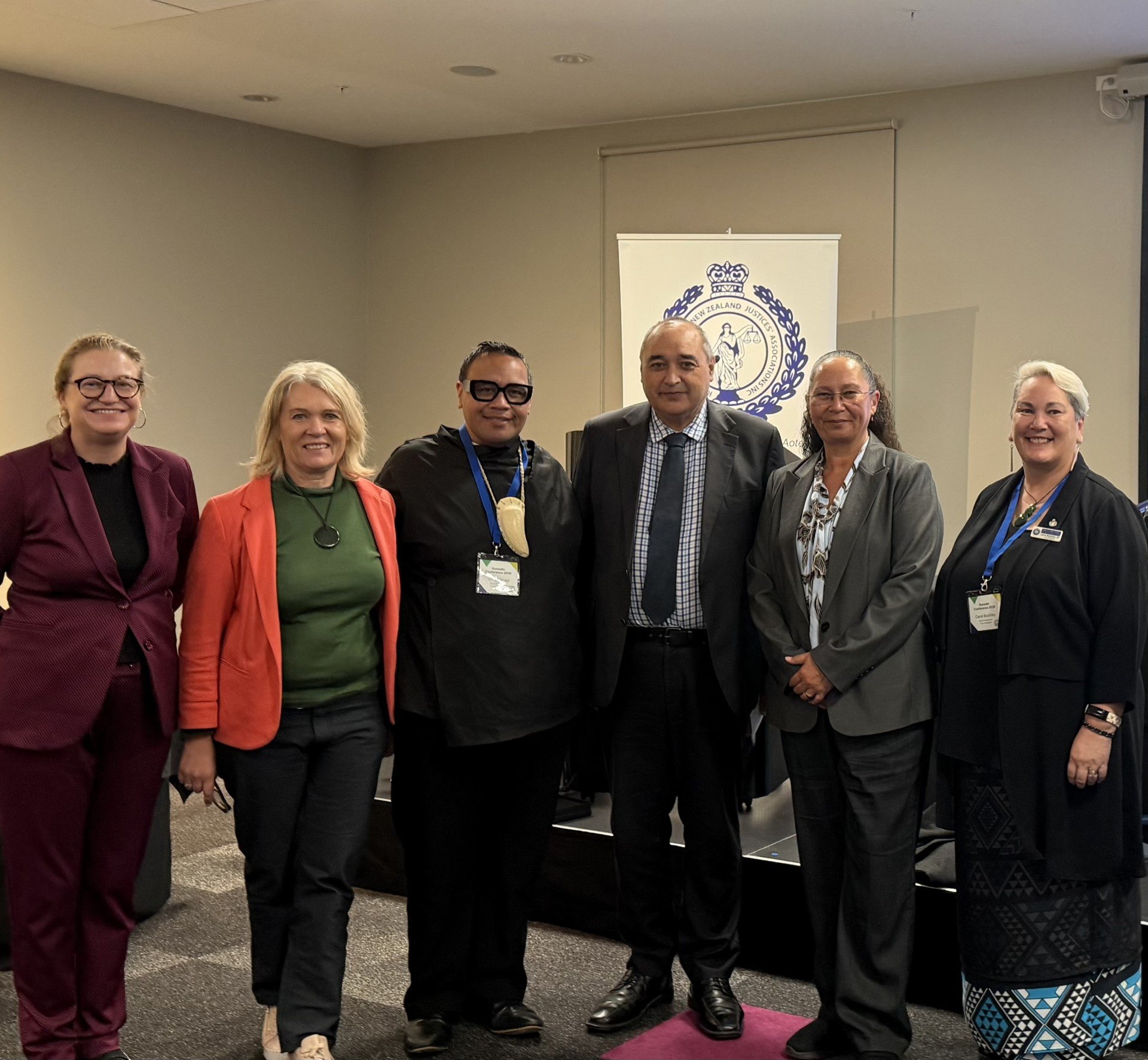
Chief District Court Judge Heemi Taumaunu was the chief guest at the Justice of the Peace national conference held in Dunedin last week, where he delivered a wide-ranging address focused on the future of justice in New Zealand.
Judge Taumaunu told the 100-plus delegates at the Glenroy Auditorium he chose to "talk from the heart", describing Justices of the Peace as "the fundamental plank of justice in this country" and thanking them for their voluntary service on behalf of the District Court.
A key focus of the speech was Te Ao Mārama, the District Court’s ongoing initiative aimed at enhancing the quality of justice for all.
Judge Taumaunu said the core aim of the initiative was to ensure people who come to court feel "seen, heard, understood, and able to meaningfully participate" in their own cases.
Te Ao Mārama is being implemented through eight best practices, including stronger connections between courts and communities, improved information for judges, better processes for victims the use of plain language, alternative courtroom layouts, and "solution-focused judging" in appropriate cases.
In eight funded locations, community service providers are now based within courthouses to help connect people with support services. Judge Taumaunu said the cumulative effect of the changes was already altering the court experience in those areas.
He also referenced the District Court’s progress in reducing its criminal case backlog by 22% over the past year, noting that improving timeliness while embedding reform must be done sustainably, with attention to wellbeing for court staff and judicial officers. — Allied Media


