
PHOTO
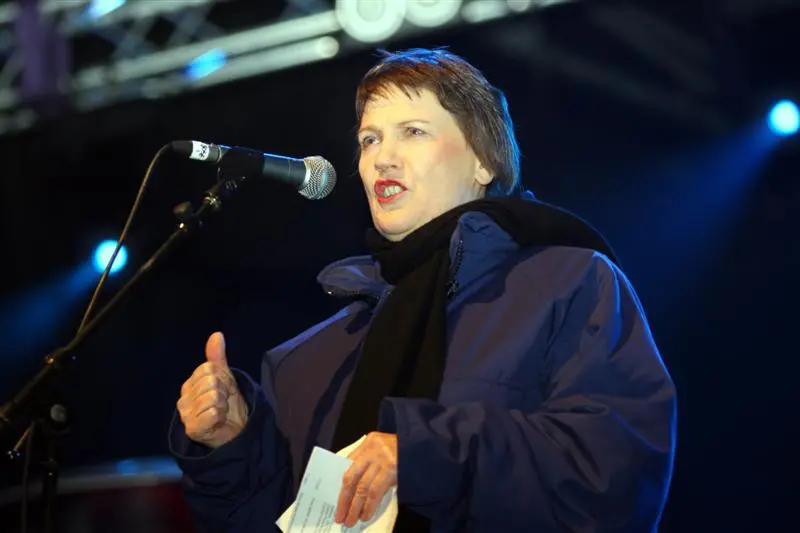
Political polls continue to have Labour trailing National by a substantial margin.
Nothing the Government does seems to make a difference, and the talk in some parts of the Labour Party has turned to leadership.
The contest to replace Prime Minister Helen Clark might be less brutal and more clear cut than previous leadership challenges, depending on the outcome of the election this year.
Miss Clark remained confident yesterday that National's lead in the polls would start to slip when the campaign started and she was "not even" thinking about handing the leadership to someone else.
Labour MPs will meet in Wellington today to figure out what they can do to turn the polls around.
In 1990, Labour changed its leader three times in the turmoil before the election but changing faces did not stop National from sweeping to victory.
Miss Clark was asked whether she would consider stepping aside to give Labour "a new face" before the election if the polls did not change.
"That's a question I'm not even prepared to contemplate," she said.
However, within Labour circles the speculation has started on likely replacements.
The prime minister will have led the party one month short of 15 years if the election is held in November.
If, as Miss Clark continues to believe, Labour can cobble together a coalition government, then she remains safe and can leave in her own time, having taken Labour to a historic fourth-term win.
But if Labour loses and the election result is close, party sources believe Trade Minister Phil Goff is the principal candidate for the job.
He is seen as a safe replacement who would not shift Labour markedly away from its centre-left position.
Although he is tainted with having been an MP in the Rogernomics era, many of Labour's supporters are too young to remember Sir Roger Douglas and his ideas in the David Lange-led government.
Police Minister Annette King is seen as the logical deputy leader for Mr Goff, to give the party a gender balance and an Auckland-Wellington split.
The last four opinion polls published show National's support at more than 50% and its lead over Labour at more than 20 points.
If the polls hold up, Labour could lose up to 18 MPs, including electorate members.
Labour atcrossroads> From Page 1If the defeat is not too broad, Mr Goff will be challenged by Health Minister David Cunliffe and Labour Minister Trevor Mallard.
Both would bring with them an image problem.
Mr Cunliffe was identified early in his career as a potential leader, but has earned the disdain of some colleagues for his "superior" attitude.
That has mellowed somewhat and as health minister, and also as communications minister, he has shown a preparedness to take a hands-on approach to his portfolios.
Mr Mallard was demoted for punching National Party MP Tau Henare, but retains strong friendships in the Labour caucus and is deputy finance minister.
As a former chief whip, he knows how to gather the numbers for a close vote.
A decimation of Labour will see other candidates chancing their arm in the belief that it will take Labour six years, or two terms, to win office.
Energy Minister David Parker and Immigration Minister Clayton Cosgrove will mount challenges.
Neither is particularly popular with colleagues, and Mr Cosgrove will be a fiercer competitor than Mr Parker.
Mr Cosgrove has been a member of the party since he was 14, and is a protege of former prime minister Mike Moore.
Mr Parker is seen more in the mould of former prime minister Sir Wallace (Bill) Rowling, and would offer a leadership style out of step with modern politics.
Also in the mix at this level will be Building and Construction Minister Shane Jones, a Maori MP of whom was expected great things.
He is said to be "hugely bright" but pompous and obviously ambitious.
Clark successors?
•Labour wins: Helen Clark stays as prime minister.
•Labour loses narrowly: Phil Goff takes over early next year.
•Labour loses moderately: Mr Goff, David Cunliffe and Trevor Mallard fight it out.
•Labour thumped: Free for all, with David Parker, Clayton Cosgrove and Shane Jones fancying their chances.