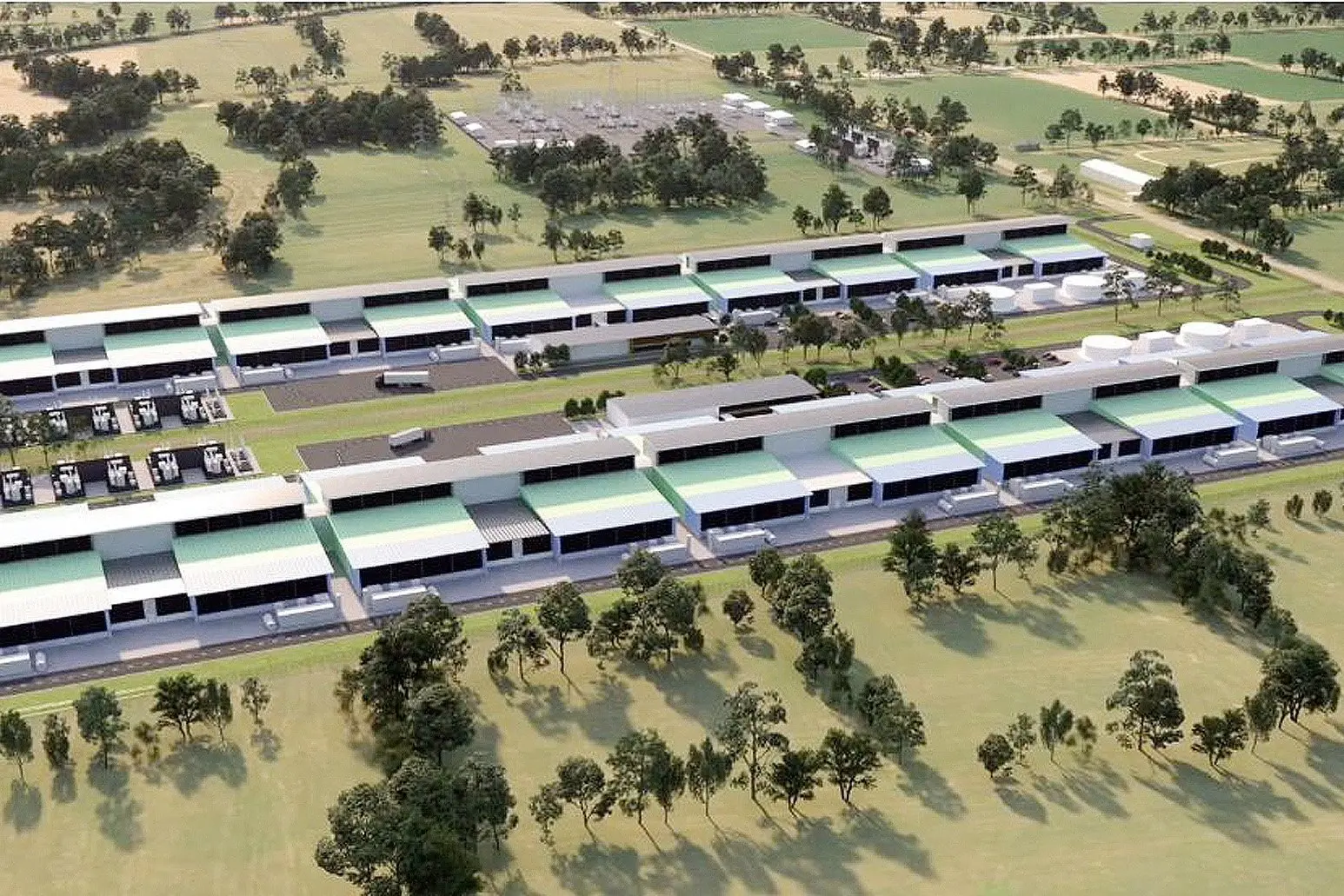
The amount of electricity needed by a “hyperscale” AI data centre in Southland remains a mystery after its owner admitted its size is undetermined. In an answer to the Otago Daily Times, Datagrid chief executive Remi Galasso said his firm was still working on the data centre’s design “to optimise the site”. The “final” megawatt load would emerge “once this design is finalised.” Different documents have mentioned different power requirements, including 240MW, 280MW, 360MW and 1000 MW. The largest grid user in the country is Tiwai Point aluminium smelter near Bluff, which uses 572MW — about 13% of the grid’s power. SuppliedDatagrid chief executive Remi Galasso says megawatt requirements are dependent on the data centre’s final design. Photo: supplied The data centre was consented by Environment Southland and Southland District Council (SDC) in March to provide up to “240MW of IT capacity” but the consents do not constrain power use. A SDC spokesperson said power requirement for Southland was “not a resource consent matter”. Government-owned grid operator Transpower confirmed it is still at the “investigation stage” with Datagrid regarding a 280MW capacity connection, including “evaluating network impacts”. There was no deadline for a contract agreement and an amount above 280MW would require Datagrid to ask to “upgrade or install additional equipment to provide for greater capacity at the point of connection.” A Ministry of Business, Innovation and Employment (MBIE) spokesman said that, under the New Zealand Electricity Industry Participation Code 2010, electricity customers “do not have an obligation to state maximum demand” to the Electricity Authority (EA). The EA, which has regulatory responsibility for managing electricity supply and demand, has logged the 280MW — which Datagrid has indicated to Transpower — on a pipeline of “load projects” coming on to the grid. Out of 1780MW needed for 31 pipelined projects, 1135MW is for 13 data centres, inclusive of the 280MW, the EA said. [Missing Credit][object Object] However, a Datagrid announcement — about gentailer Mercury buying a 12.7% stake in the firm for $53 million — called the centre a 360MW project. Mr Galasso said the “initial” data centre design was 280MW and the 360MW figure was the “total GXP [grid exit point] capacity on the site”. Datagrid head of legal and corporate Emily Reeve clarified, saying the 360MW figure should read 360MVA (megavolt-amperes), meaning the maximum power running to a planned substation rather than the amount extracted. Within the limits of the 360MVA, the firm was working to optimise the site, she said. However, a briefing by MBIE staff for Minister for the South Island James Meager last year said Datagrid’s intention was to consume 280MW in “phase one” and 1000MW “upon completion”. When asked about the 1000MW figure, Ms Reeve said the firm had “no intention to expand the GXP beyond 360MVA or develop another GXP for the site”. However, she added that “Datagrid considers Southland and the South Island holds huge potential in relation to being a data centre hub attracting international tenants”. Any future developments would “require significant planning alignment with Transpower to ensure sufficient grid capacity”, plus consents. A 1000MW load on the grid is the same as the load needed to power a million homes based on average consumption over a year — and, at peak times, would power 250,000 homes, the Energy Efficiency and Conservation Authority (Eeca) said. Eeca is researching the impact of “hyperscale” AI data centres — that use 200MW or above — with a goal to ensure they “have energy efficiency and flexibility designed in”. New Zealand’s largest planned wind farm, Contact Energy’s Slopedown, is 70km east of the Datagrid site and will produce enough electricity to meet Datagrid’s GXP capacity, but there has been no news about it supplying the centre. When Energy Minister Simon Watts announced the 380MW wind farm’s fast-track approval in April he said it would “play an important part” in giving New Zealanders “reliable, affordable and abundant energy”. Datagrid claims its data centre will be “powered by renewable energy” and has signed a power purchase option for 140MW from Mercury, which operates other renewable generation projects. The government, Datagrid and Mercury have said such arrangements stimulate more investment in renewable generation. However, grid demand still sometimes outstrips New Zealand’s renewable power, and expensive thermal power from gas and coal comes onto the grid, increasing emissions and raising wholesale market spot prices. The government plans to import liquified natural gas (LNG) as domestic gas supplies dwindle. Transpower said it had “provided technical advice” about grid capacity to Invest NZ, which is promoting New Zealand as a data centre location with abundant renewable power, but the advice had “not been published”. Green Party co-leader Chloe Swarbrick has called for a one-year pause on AI data centres while regulation is considered. On July 28, Australia’s Energy and Climate Change Ministerial Council decided to legislate that data centres must offset grid demand through creation of nearby renewable electricity generation. On Thursday, Datagrid announced Alcatel Submarine Networks and OMS Group would construct a submarine cable from Invercargill to Melbourne, which would provide “better internet” for local companies. mary.williams@odt.co.nz