
PHOTO
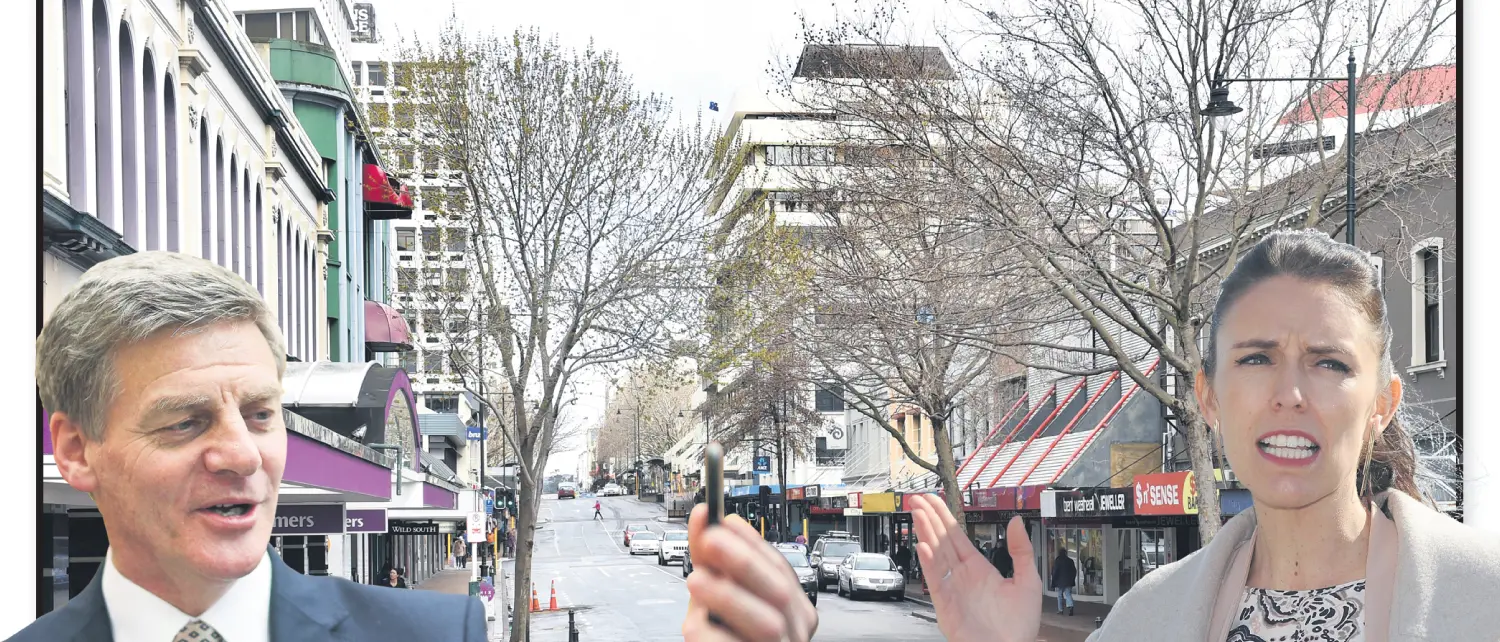
The 2017 election looks like being one out of the box, but as Tom Rawcliffe writes, if we jump back 60 years, it can seem like little has changed.
Employing yet another political sporting metaphor, the headline reads: ''Display of political kicking for touch''.
It is September 23, 1957, nine weeks out from polling day, and an ''air of stultified caution'' has apparently fallen over New Zealand's political scene.
According to the Otago Daily Times article, the run-in to the November 30, 1957 election was failing to excite voters, who couldn't be blamed if their conversations revolved more ''around their spring gardening, Ranfurly Shield rugby and picking winners for Saturday''.
Until early last month, the same could probably have been said about the current election. A third-term government happy to sit back and go through the motions; an opposition stalled in the polls, seeming to offer little in the way of a viable alternative.
As September 23 drew closer, there was a general feeling that this election wouldn't be much to write home about.
Few would argue that now. What was shaping up as a routine and uninteresting election has morphed into a spectacle of political theatre brimming with scandal, last minute leadership changes, dramatic falls from grace, abrupt retirements, and plenty of big juicy election promises.
Indeed, the 2017 election seems likely to go down in history as uniquely engaging and quite particular in the issues it addressed. But it is easy to lose perspective and become seduced by the present.A look back 60 years shows that as we've changed, some of our concerns have stayed much the same.
Nineteen-fifties New Zealand can evoke a mixture of emotions. Some would say these were simpler and better times; others that 1950s New Zealand was behind the times.
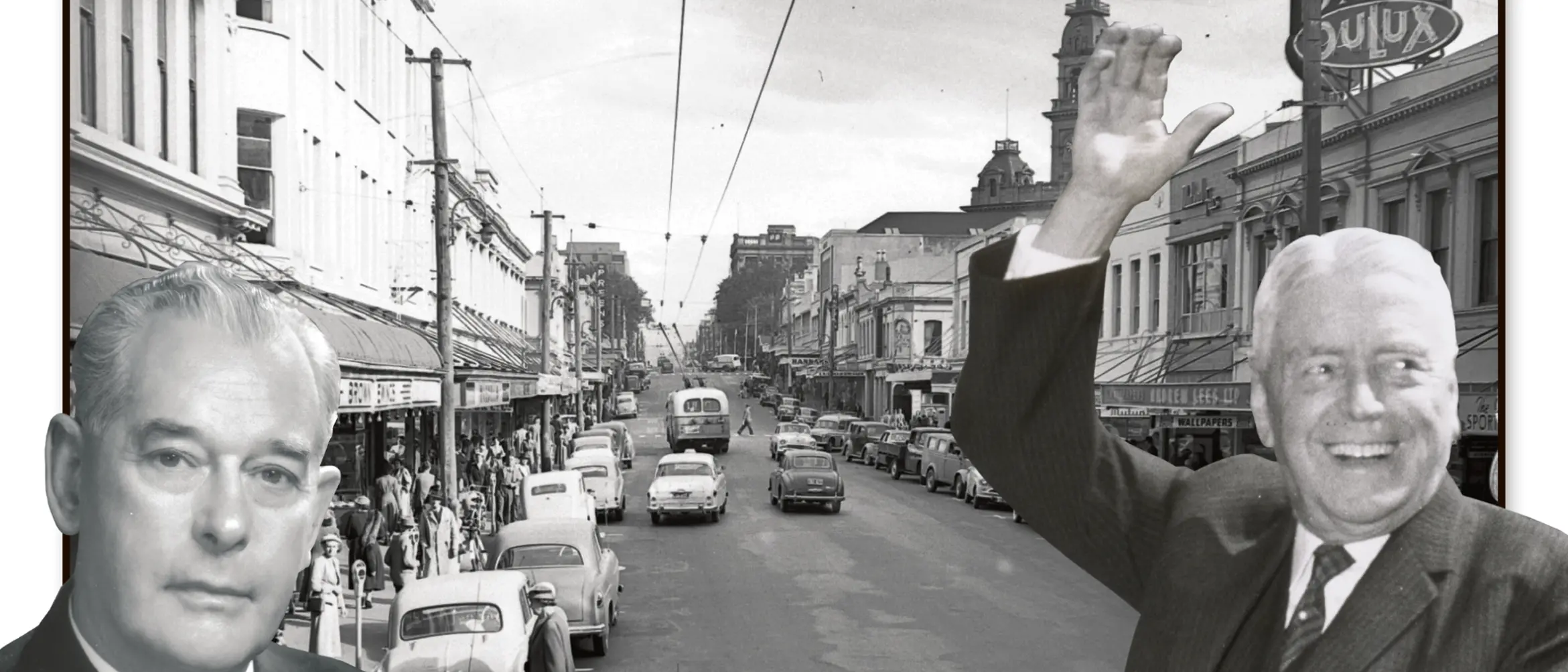
What is clear is that New Zealand was a much smaller and more intimate society back then.
For a start, the population was less than half what it is today, only reaching the two million mark in September 1952.
The change in population between then and now has been most pronounced in Auckland, where the population has expanded by more than a million people in the past six decades.
Dunedin, by contrast, has bucked the population trend: in 1956 it had only 27,000 fewer people than it has now.
Arguably, there was more at stake in an election back then, as the state played a much greater role in controlling and regulating the economy. The top marginal tax rate was 77.5%.
Businesses and industries were required to hand over details of their costs to the Price Tribunal, an arm of the state that would assess the figures and grant an allowance for ''reasonable profit''.
Shop trading hours were heavily restricted. Sunday trading was out of the question, and applications for trading on Saturday were often met with controversy.
Tourists from more cosmopolitan countries were often bemused by this. When a beauty queen from Sydney visited in 1959 she was asked what she thought of New Zealand.
''I don't know,'' she replied.
''It was closed.''
The disruptions and drama of the previous decade led many New Zealanders to seek a more comfortable and secure reality in the 1950s.
Many of our bulging baby boomer population came into the world during the decade, as young New Zealanders married and had children in energetic fashion.
Youth culture came under the spotlight mid-decade following several high-profile incidents involving gangs of young male ''bodgies'' and their female ''widgie'' counterparts. An Auckland milk bar stabbing and Hutt Valley sex scandal convinced many parents that promiscuous attitudes and a lack of morals was leading the nation's youth astray.
It's safe to say that a 37-year-old woman would not have found herself leader of the opposition in 1957. Gender roles and attitudes were firmly traditional, and the number of women in Parliament was in the single figures. Prominent female candidates at the 1957 election included the first ever female cabinet minister, Labour's Mabel Howard, National's Hilda Ross, and North Dunedin's very own Labour MP, Ethel McMillan.
On the international stage, the Cold War was in full swing. New Zealand was on high alert for ''reds under the bed''. Any suggestion of communist thought was treated with suspicion by authorities worried about maintaining New Zealand's position as part of the ''free world''.
Nuclear weapons, having made an unwelcome comeback in 2017, were all the rage in the 1950s too. The nuclear arms race was taking off, as the United States and Soviet Union competed to see who had the biggest toys.
Among all this was the reality of parliamentary elections every three years, and 1957 bought with it the vote for the 32nd New Zealand Parliament. The Sidney Holland-led National Party went into the election with eight years and three terms under its belt.
The National Party of the post-war period largely adopted and embraced the welfare state structure built by the preceding Labour Government in the 1930s.
Electoral divisions and political rhetoric aside, both major parties advocated full employment, an extensive social safety net, significant state investment in services and infrastructure, and checks and controls on private capital.
Last minute leadership changes before an election are nothing new, as 1957 goes to show.
Holland's health was deteriorating, leading to widespread concern about his ability to carry out the role of Prime Minister. After being coaxed by senior colleagues, he announced to the party conference in August that the time had come to step down.
His successor was his long-term deputy, Keith Holyoake.
''Kiwi Keith'', as he was known from an early age, was a former hop and tobacco farmer from Riwaka, near Motueka. His parents couldn't afford to keep him at school so he left at just 12 years old, beginning his working life helping out on the family farm.
Holyoake was an experienced politician. Save for a five-year absence between 1938 and 1943, he had been an MP since 1932. He was well known for speaking with a peculiarly plummy voice, leading some to see him as pompous and elitist.He was far from it. His telephone number was listed in the phone book and he often walked to work. A staunch nationalist, Holyoake envisaged a future for New Zealand as an independent nation, standing firmly on its own two feet.
Walter Nash had been Labour's opposition leader since 1951. Born in the English Midlands in 1882, Nash emigrated to Wellington in 1909. He quickly became involved with the fledgling Labour movement, and was elected to Parliament in 1929.
Subordinate only to Michael Joseph Savage and Peter Fraser in the First Labour Government, Nash was Finance Minister between 1935 and 1949. He also later became Deputy Prime Minister following Savage's death in 1940.
A committed Christian, his religion heavily influenced and guided his approach to politics. He was unswerving in his belief that every Christian should seek to bring about God's Kingdom on Earth and considered himself a Christian Socialist. For Nash, socialism was quite literally applied Christianity.
Beyond the two main parties there was little choice for voters. This was well and truly a National-Labour ''drag race'', to use Bill English's words from 60 years later. The only alternatives were Social Credit, the Communists, or the odd independent, who rarely made a dent in the main parties' majorities.
But, for all the differences, a trawl through the Otago Daily Times archives from the months leading up to the November 30, 1957 election reveals some curious similarities between the election year issues occupying the minds of voters and politicians then and now.
HOUSING
Housing is undoubtedly one of the big issues at this year's election.
Questions about whether the Government should do more to provide housing for those in need, or about how the state regulates and oversees the housing market, have been circulating for a while now.
These issues were also pressing in the lead up to the 1957 election. Of particular concern was the issue of housing for Maori. The appeal of the city lights saw Maori rapidly urbanise in the post-war years. In the space of two decades, Maori went from 75% living in rural areas to about 60% urban. This brought new challenges for, and disruptions to, traditional Maori ways of life. It also put increasing pressure on the state to provide support.
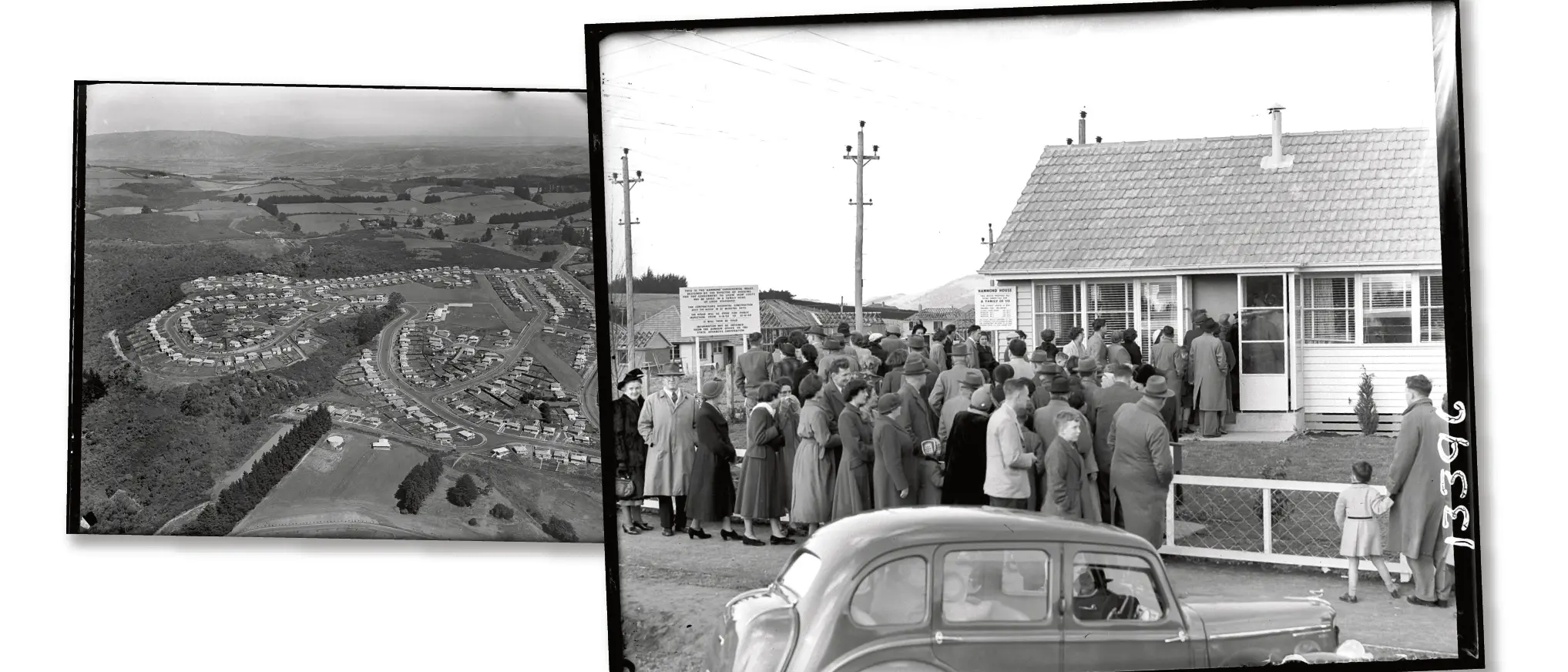
In a September 4 report from Parliament, Minister of Maori Affairs, Ernest Corbett, is quoted as warning of the possibility of a ''racial problem'' developing in New Zealand unless ''care is taken'' to solve the issue of state housing for Maori. Not surprisingly, the eye of the storm was in Auckland, where only 27 state houses had been made available in the previous year while more than 700 urgent applications were still to be filled. Responding to criticism from the opposition, Corbett and colleagues pointed out that more than 3000 houses had been built for Maori under National compared to just over a 1000 under the previous Labour Government. There is an echo of this year's housing debate: the Opposition chastises the Government for not doing enough; the Government counters with statistics suggesting they're doing exactly what's needed. The contemporary housing problem is more wide-ranging, although Maori are among those hardest hit by homelessness and unaffordable housing. Nevertheless, as in 1957, the recent pressure on housing supply has been driven by rapid population growth and the problem is most acute in Auckland once again.
When Mr Corbett addressed parliament on this issue in 1957, he lamented the fact that party politics had crept into the debate. He would be heartened to find out all parties in 2017 agree that measures must be taken to alleviate housing problems; even if the method is still a matter of debate.
PRIMARY INDUSTRIES
One of the major continuities been 1957 and 2017 is the central importance of the primary sector to New Zealand's economy. Consequently, election campaigns often feature arguments about the interplay between the primary sector, the Government, and consumer. A current example is the spike in butter prices.
Faced with having to pay more than $5 for a block of butter, many are questioning why consumers in a nation of such natural abundance are having to stump up so much for their groceries. Similar questions were being asked in 1957, the ODT reporting ''stormy scenes in the House'' as politicians debated the Meat Amendment Bill. The Bill was designed to protect the reputation of New Zealand meat overseas by ensuring that meat pre-packaged for export was of sufficient quality. It attracted criticism from the Labour Opposition, who argued that it failed to provide New Zealand consumers with the same safeguards as international consumers. As with the recent butter price hike, there was a feeling that New Zealanders were getting a raw deal.
In 1957, the best quality meat was being sent offshore and local consumers were having to make do with what was left. This at a time when New Zealand's primary sector was entering a transformative period. According to Jim McAloon, associate professor of history at Victoria University, the mid-1950s saw New Zealand's leaders realise how vulnerable the country's position as Britain's farmyard was becoming. He pinpoints the end of the bulk purchase agreement with Britain in 1954 as the moment Britain in 1954 as the moment when New Zealand's leaders saw the writing on the wall. Under the bulk purchase agreement, Britain would buy our exportable surplus at guaranteed prices.
''As soon as that ended, the weakness in the British market became obvious,'' says McAloon.
The Mother Country was beginning to cut the umbilical cord. Concerns about the security and viability of New Zealand's primary sector were intensifying.
Such concerns remain relevant, due to the continued importance of the primary sector to New Zealand's economy. High butter prices and water taxes are just two of the latest examples in a long list of election year issues regarding the primary sector's relationship to government and consumer.
ELECTION PROMISES
An election is never complete without politicians dangling the carrot.
This year's campaign has seen its fair share of policy promises, ''election bribes'', ''lolly scrambles'' ... whatever you want to call them. Labour has pledged to invest significantly more in health, education, housing, and various other services and sectors. National, jolted into action by a resurgent Labour, has announced extra money for a variety of things, including social housing, transport projects, and boot camps for naughty teenagers.
There's nothing particularly sinister or new about it. Elections are prime time for leaders to show voters what they plan to do if elected, and such plans are invariably going to involve spending money. Promising to splash-the-cash and invest in the economy is an age-old way of enticing voters in the run-up to an election.
The 1957 election was much the same.
The most prominent spending promises of the campaign revolved around tax refunds for the following year, when the switch to PAYE was taking place. The shift from paying tax on past incomes to paying on present ones meant that a year's taxation could be dropped without leaving a gap in the state's revenue.
Consequently, both major parties offered the remission of one year's taxation. They also both proposed a tax rebate for when PAYE commenced the following year. National offered a 25% refund of up to £75 and Labour offered a flat rebate of £100. Both parties were accused of election year bribery. The Labour movement's weekly, the Standard, did little to dispel the notion when it published a billboard bluntly asking, ''Do You Want £100 or Not?''.
An ODT opinion piece a month out from the election questioned the viability of Labour's promises. Entitled ''Any votes for sale?'', it argued that Nash and his team were offering costly and ill thought-out spending plans.
''Mr Nash ... is bidding for votes on the highest possible scale and the children of New Zealand are now to be put on the chopping block,'' it claimed. It questioned Labour's policy of increasing the weekly family benefit from 10 to 15 shillings. This, combined with the £100 tax rebate, would arguably cost the Government an extra £28 million. Again, there's an echo of recent debates: think Steven Joyce's hatchet job on the supposed $11.7 billion dollar ''hole'' in Labour's fiscal plan. With spending promises being thrown around left, right and centre this year, some are once again wondering whether they're watching an election or an auction.
Ultimately, the 1957 election went to Labour, with Nash becoming the oldest elected prime minister at 75 years. Labour won 57,000 more votes, grabbing 41 seats to National's 39. Nash's Labour Government would last only three years though; its term marred by economic crisis and the notoriously unpopular ''Black Budget''.
''Kiwi Keith'' would find his time in the sun three years later, going on to serve as Prime Minister until 1972. This year, English will be hoping to emulate Holyoake and become only the second National leader to lead the party to that elusive fourth term. Ardern and Labour will no doubt be hoping the election turns out like it did 60 years ago.
This time next week, when New Zealanders head to the polls, many will have the future firmly at the forefront of their minds. The past, though, should always be considered. While it may seem foreign and irrelevant on the surface, taking a closer look at history can also uncover interesting comparisons between then and now. The 1957 election is but one example.
- Tom Rawcliffe is a University of Otago humanities intern at the Otago Daily Times.