
PHOTO
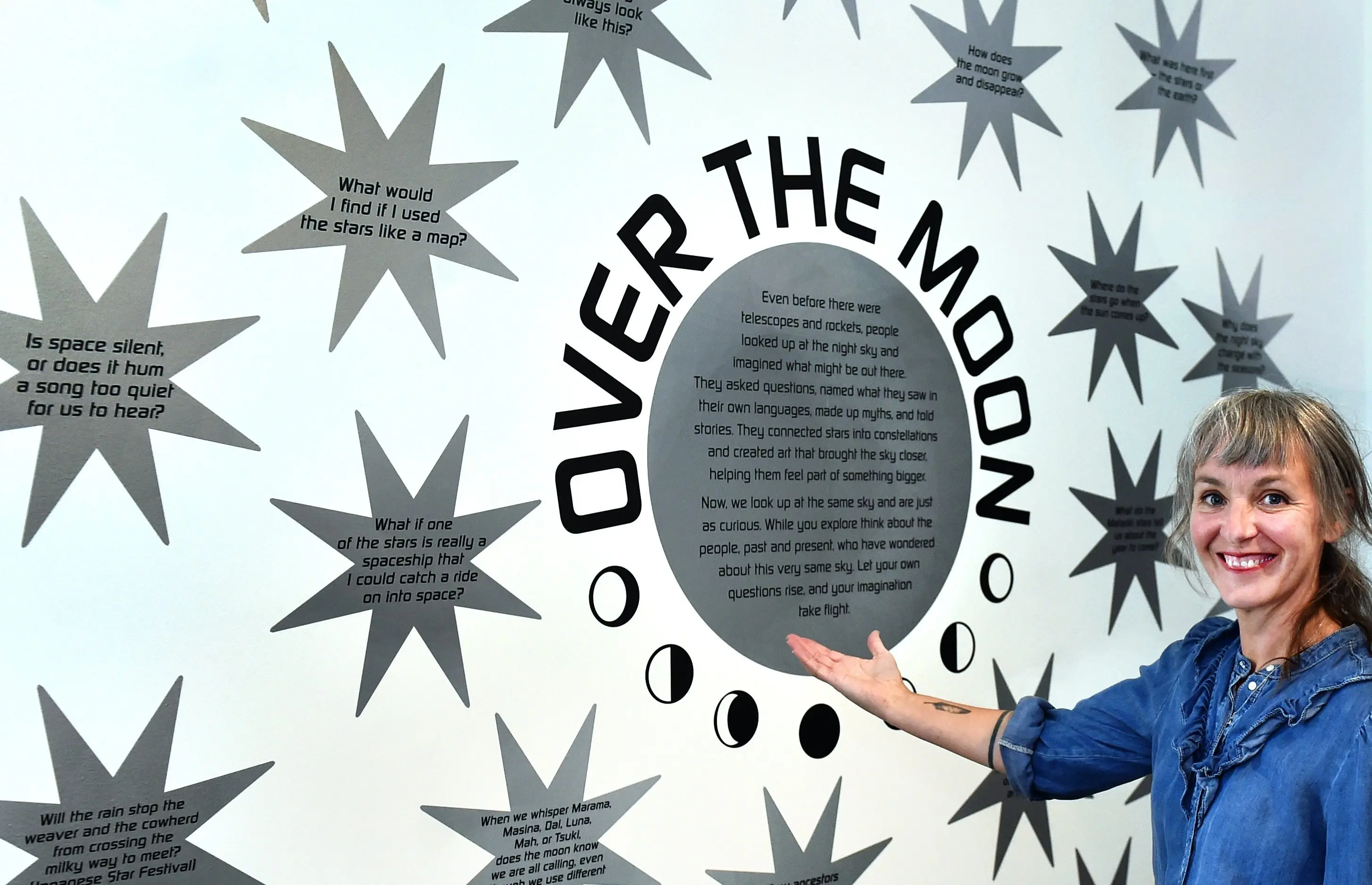
Though petrified of the dark as a child, Jennifer Boland can remember the wondrous feeling of lying on the grass looking up at the night sky.
"I thought that someone had made this incredibly big black velvet curtain and would pull it across, and that was night time. But somebody had come along and stabbed holes in it, which allowed the sunlight to sparkle through."
The thought allayed her fears of the dark and years later has inspired an exhibition at Dunedin Public Art Gallery, "Over the Moon".
"I like how kids work things out with their own logic, and I wanted to capture that."
The area in the gallery "Over the Moon" occupies is for families and exhibitions that encourage lifelong curiously, imagination and wonder.
Boland’s experience all those years ago came back to her as an adult when she saw a shooting star at a particularly difficult time in her life.
"The star fell in the most beautiful arc and it was so slow.
"The sky again became really important to me.
"I wanted to put the sky on the floor so people could start looking up themselves."
It also gave her a new perspective on Matariki, a concept she had taught for many years, focusing on the harvest and thanksgiving side of it.
"Then I saw those stars that season always sparkly and dancing.
"I understood the mythology in a way that I hadn’t before.
"I’m not the only one who’s going to feel like that about stars and the moon and all of those things. They become really important.
"I wanted to give people who are also having that feeling a space to explore that."
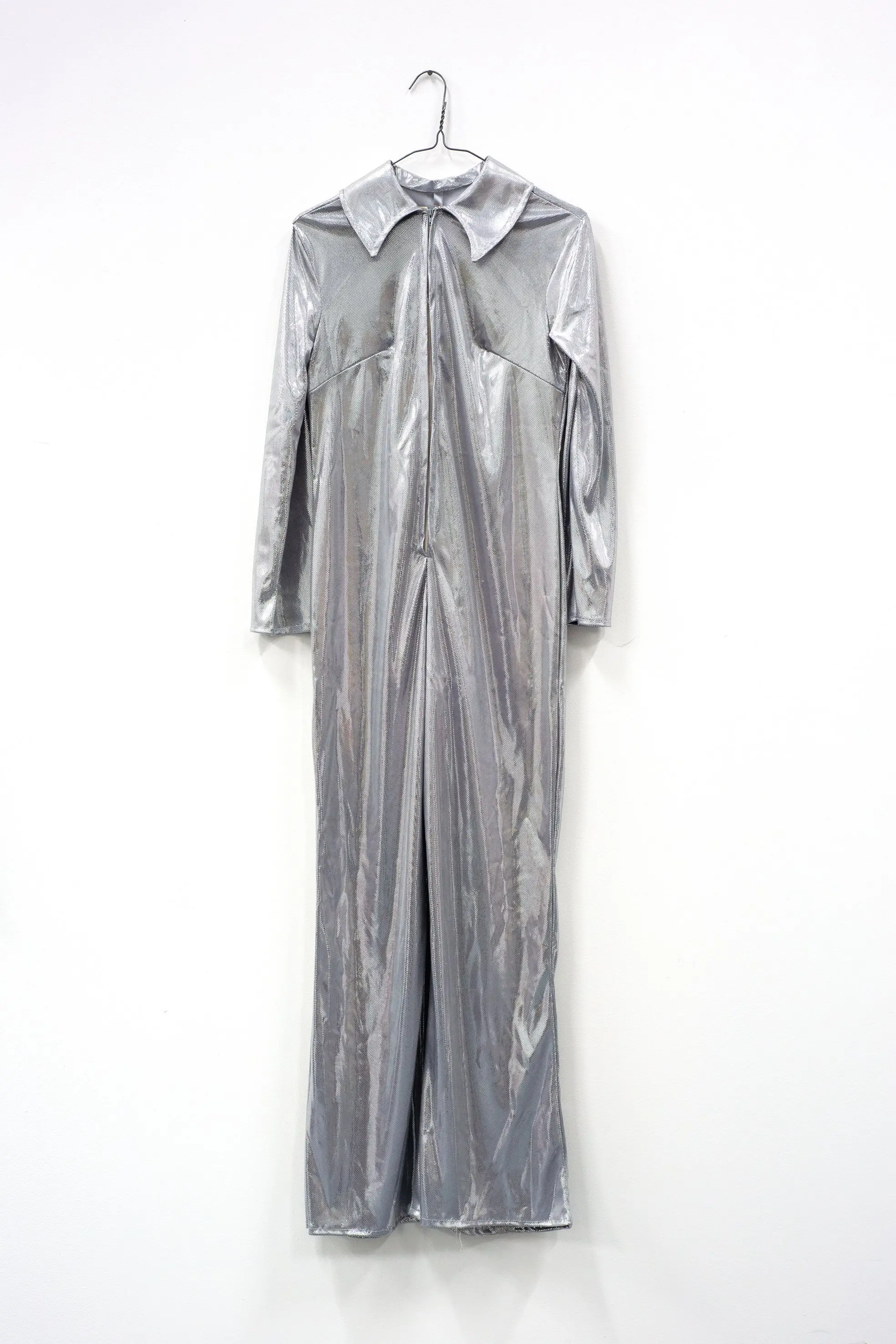
Boland, a Dunedin Public Art Gallery technical specialist, enjoyed the opportunity to select works from the gallery’s collection that spoke to her feelings.
She chose works that fell into three sections — the depth of the night, the thrill of space and the symbols of the night sky and space.
It includes photographs, etchings, sculptures, textiles and prints from New Zealand and international artists such as Michael Parekōwhai, Wayne Barrar, Francis Upritchard and Ronnie van Hout.
New Zealand sculptor Parekōwhai’s Theta Orionis (2001) evoked those feelings of wonder and connection, she said.
"You can lose yourself in it.
"The technicality of this is it’s sandpaper with some paint on it.
"But actually, it is that moment when you’re looking up in the sky and it’s just you and the universe.
"You go through that when you feel like you’re as tiny as a piece of sand.
"Those [are] magical moments and I feel like we’re at a time where we need to find those moments ... those glimmers."
For Boland, getting to exhibit Detrimental Sign (2003), by New Zealand sculptor Upritchard, has been a real treat, as she has always loved the work.
"I had the absolute pleasure of getting to place them."
There were some radically contrasting works in the exhibition, such as American artist Robert Rauschenberg’s lithograph Space [Carl Sagan] (1994) — of an upside down astronaut floating in space — and New Zealand photographer Barrar’s Man in Outback, taken in an underground museum in Coober Pedy, Australia, 2002.
"It’s very curious."
Another work she was keen to see in the flesh was Australian-born, New Zealand-trained painter and printmaker Bonnie Quirk’s etching City Night and Day (1969).
Boland saw many different things in the print but imagined children would probably see references to Star Wars.
Another work she was keen to show was Virgin and Child (1951), a lithograph by Vanessa Bell, who was Virginia Woolf’s sister and part of the Bloomsbury group.
It features figures surrounded by stars referencing the Star of Bethlehem story.
"I quite like to do shows that are very eclectic because I want the kids to know there is more than one way to draw something or paint something or to respond to something. I think that’s really important."
Tying everything together is a wall of stars, featuring questions children may ask about the night sky and urging adults to let their imagination take flight.
"It’s that window of time when children are looking at the sky and they’re taking what they see — and also pieces of what they’re starting to learn — and putting them together and coming up with their own ideas.
"So, it’s more wondering than looking for facts.
"It’s that opportunity to remember the child within and think of what was it that you used to wonder when you looked at the sky before you knew all the rules."