In the room

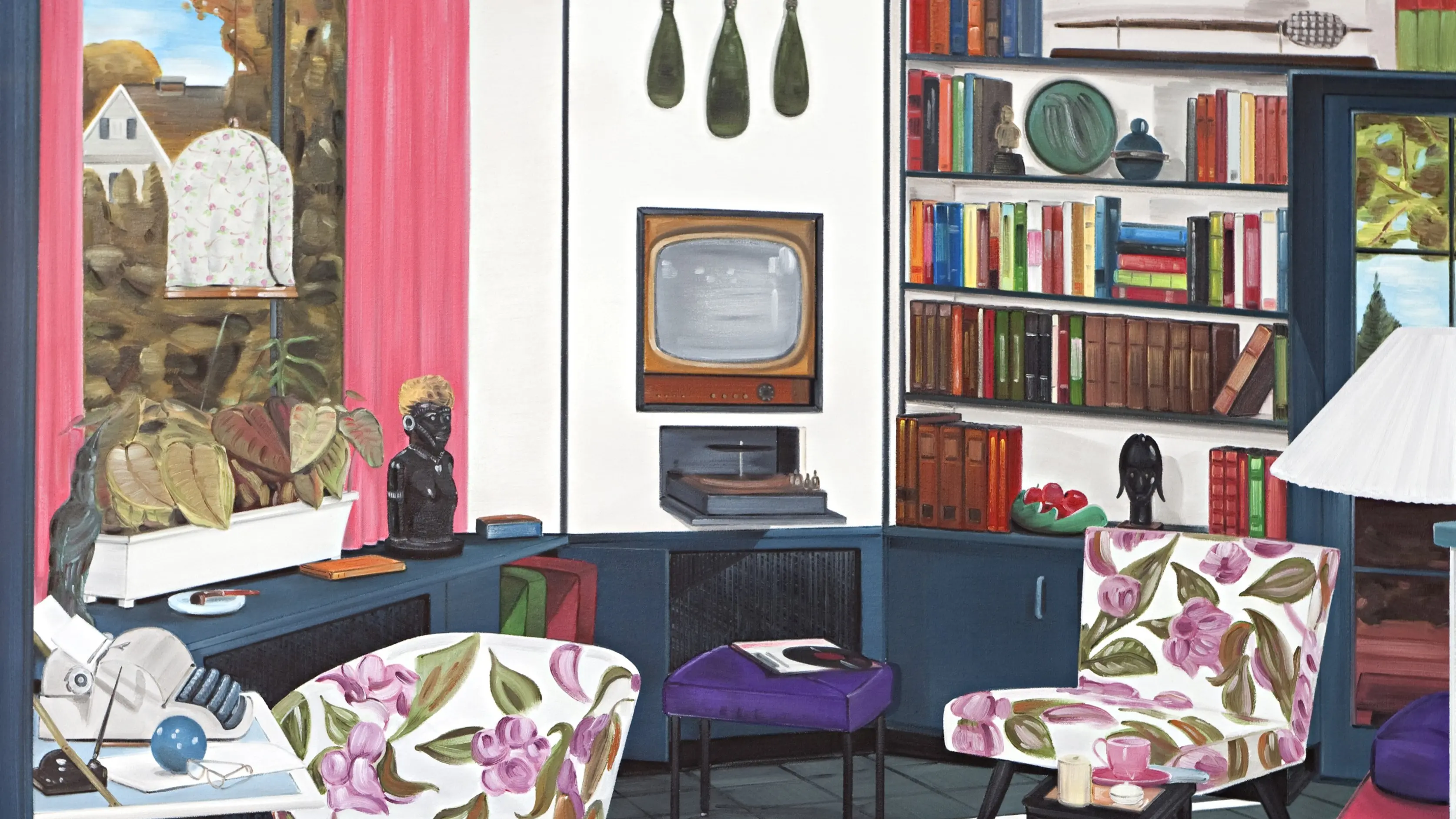
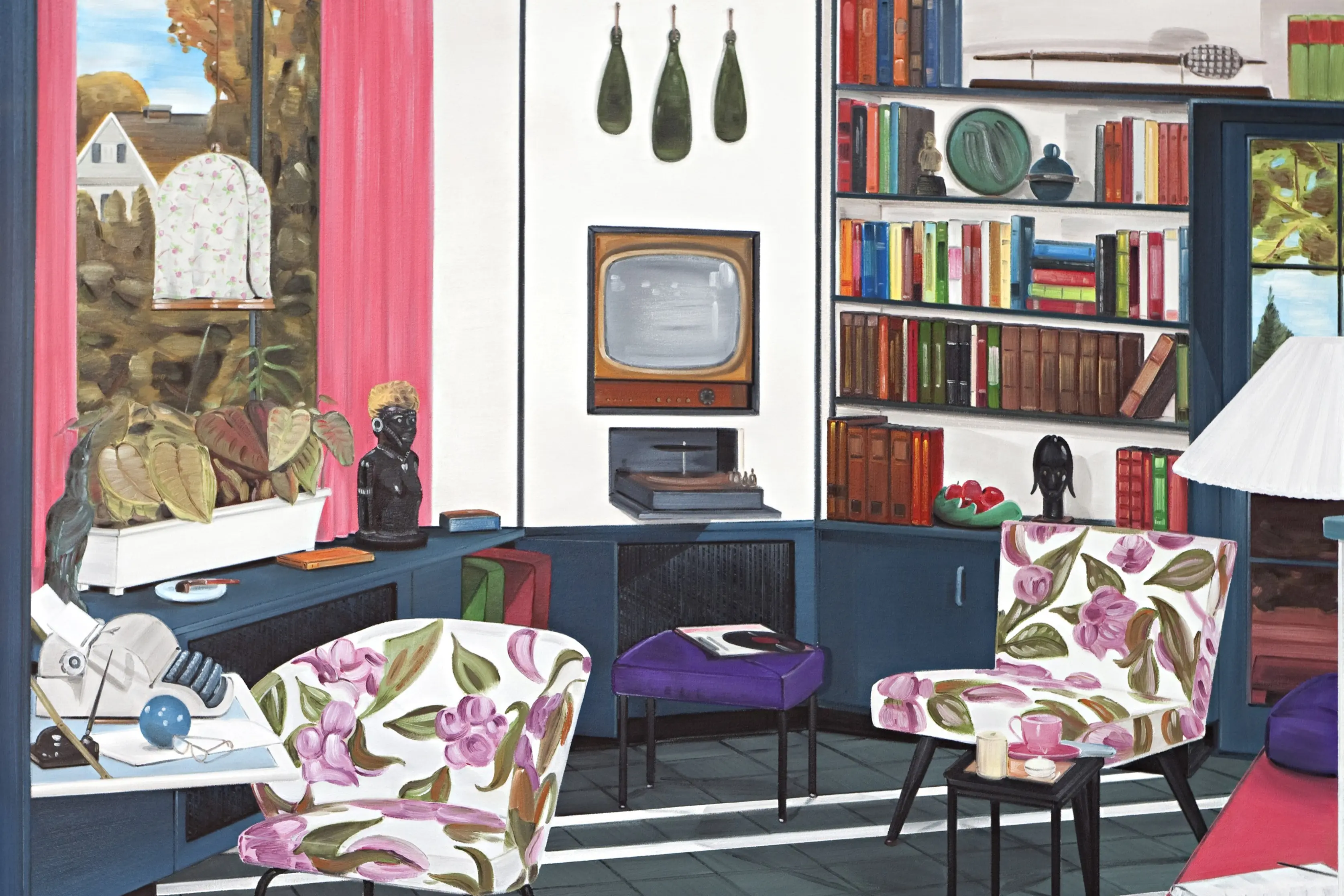
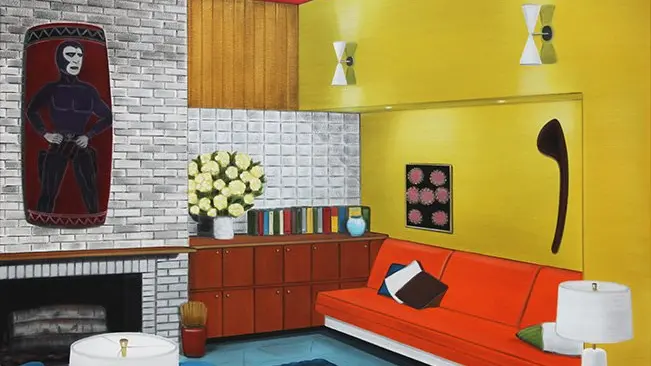
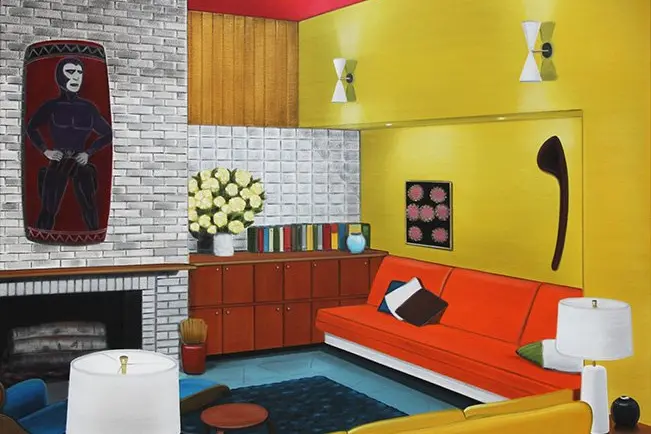
Graham Fletcher’s Spirit Rooms. Photos: Supplied
Graham Fletcher’s Lounge Room Tribalism.

Dunedin artist Graham Fletcher has been given the rare opportunity to see 20 years of his work displayed together in one place, at the Gus Fisher Gallery, as part of the Auckland Arts Festival.

He tells Rebecca Fox how it has highlighted how his work has changed.

Dunedin artist Graham Fletcher. Photo: Supplied
Digging around in your mother's garage for stuff you have stored over the years is something most of us have done at one time or another.

It is just not often that the ''stuff'' is the result of 20 years of your working life.

That is what Dunedin artist Graham Fletcher had stored in his mother's garage in Auckland.

The invitation to have a survey show as part of the Auckland Arts Festival meant he had to delve into the ''motherload'' of work.

''Where would we be without our mothers' garages,'' he said, laughing.

He quickly adds he does pay her for the storage space.

Opening the boxes was a bit like ''meeting an old friend I had not seen in 20 years''.

''It was a pleasant surprise. It's incredible how you forget when things are filed away.

''It's nice they are again seeing the light of the day.''

Fletcher's early works were very process driven and in the past 10 years he has consolidated what he has learned.

''I went back possibly to what I used to do in the very beginning - representational. I've gone full circle.''

Fletcher has always been interested in art so when he left school he took up a job as a draughtsman.

''For six years I worked as a draughtsman for the Post Office. It was great life experience and I made great friends.''

Then like many young New Zealanders he packed his bags and headed overseas, travelling across America and Britain before returning to Auckland.

''Then the time came for me to figure out what I wanted to do.''

He chose to study graphic design at Unitech, but in his second year painting was introduced as a subject.

''I thought painting was where I wanted to be.''

When he left, Fletcher and some fellow graduates started up an artists co-operative, hiring studio space in the Mt Eden area.

During this time he also did some part-time teaching at various Auckland technology institutes and art schools.

''When we had our first child, it forced me to rethink everything.''

Then, in 2012, along came the role of head of painting at Dunedin School of Art.

''It was ideal for us. It's a very good school with great staff and facilities.

''While an artist's life is a great life, finance is always going to be an issue, so the security of a permanent job is ideal.''

They built a studio in their backyard, which has allowed him the space to paint and his partner space to create, too.

''With young children it is easier for us to just walk across the yard.''

Having an artist as a partner also gave him the opportunity for someone to look over his work.

''Every artist needs that second pair of eyes, the honest critical feedback. So she's great. I ask a lot of her.''

His project for the past 10 years has been painting lounge spaces and inter-cultural spaces.

''The cultural overlap, how we think about those spaces.''

On a research trip in 2006 while wandering through the Centre Pompidou, in Paris, Fletcher came across an installation of objects collected by Andre Breton.

It comprised more than 260 pieces, ranging from tribal artefacts, natural objects, antique furniture, stuffed animals and trinkets, to paintings, drawings, sculptures and more.

An accompanying plaque revealed Breton had collected more than 5000 pieces.

''The Pompidou managed to salvage one complete wall from his apartment for permanent display,'' Fletcher says. ''It was like nothing I had seen before.''

Except he had; in people's living rooms.

''Most of us have lounges populated with things from our travels, from markets, from retail stores and op shops. It interests me.''

He has built up a bank of imagery, mostly images from the 1950s to early 1970s but also catalogues and books from the period and from the internet.

''With those images I make a collage. I might come across fantastic imagery, but it might not fit in the situation, so I sit on it hoping I'll remember it down the track.''

To keep his ''library'' from descending into chaos he has a good filing system on his laptop, which he goes through systematically.

He was looking forward to seeing the exhibition hung in the gallery.

''It will be good to see the work through the curators' eyes.''

University of Auckland Assoc Prof Linda Tyler, who curated the exhibition alongside Hannah Burgoyne (who is completing her MA thesis on Fletcher), says Fletcher is a unique artist operating in the local context as he is able to bring together many of the issues facing indigenous artists worldwide who are working today.

''He tackles the idea of one culture appropriating the artefacts of another - tribal chic, as it is called - but shows how he himself is implicated as a collector.''

He also shows how art, specifically painting, can adumbrate difficult colonial histories, and bring new insights to the past, she says.

Tyler taught Fletcher when he was a Unitec bachelor of design student in 1995 and was greatly impressed by his energy and output.

''He pushed through many technical boundaries and was very process-driven, wanting to test out ideas constantly. Now he has hit his stride with Lounge Room Tribalism, the number of works which he produces has slowed, with much more time taken on each composition.''

His work now seems very different than it was 23 years ago as he has shifted from abstraction into figuration and representation, but the exhibition has been installed to emphasise continuities in motifs and style, and even palette.

''It is also 'salon hung' with many works from all periods crowding the walls and this creates a sense of the 'cabinet of curiosities', that predecessor of the museum which signalled an individual collector's passion to amass as many different artefacts as possible from all over the world.

''In this way, the exhibition mirrors the content of some of the works, which represent museum vitrines, or the interiors of collectors' houses.''

• The Third Space: the Art of Graham Fletcher is at the Gus Fisher Gallery until April 28.

Add a Comment