
PHOTO
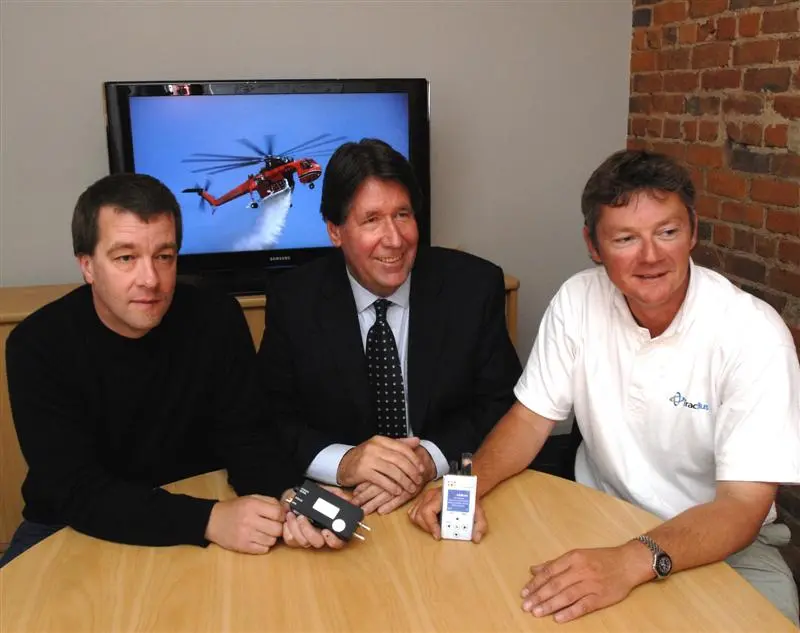
Award winning Dunedin-based GPS service provider TracPlus has secured a four-year contract to provide tracking for Australia's national aerial firefighting operations, which could incorporate potentially hundreds of helicopters and fixed-wing aircraft.
The Australian deal, possibly worth up to $1 million a year when fully operational, is the latest in a string of successes for TracPlus, which includes awards for innovation and exporting, plus contracts around the world, including certification from the powerful Federal Aviation Administration in the United States last year.
Discussions are under way with firefighting authorities in Canada and California and enforcement agencies and the military in the United States and elsewhere.
TracPlus founder and director Chris Hinch yesterday said gaining the Australian deal had been a "long slog" as first proposals were delivered 18 months ago to Australia's National Aerial Firefighting Centre (NAFC).
"Australia has become a reference country and could not be a better introduction for the [US] eastern seaboard, which is the largest fire market in the world," Mr Hinch said.
The NAFC co-ordinates more than 120 aircraft including a DC10, seven Erickson S-64 Aircranes (heavy-lift helicopters) and smaller fixed-wing craft and helicopters, but could potentially control hundreds of contracted planes during a major operation, and hundreds of vehicles and thousands of emergency staff and volunteers.
TracPlus has developed a GPS transport tracking system, for use in aviation, maritime, military and land operations for real-time tracking, in operation with businesses, government and non-government agencies in 25 countries.
TracPlus also acts as the separate umbrella data collector for several types of competing GPS tracking systems already in use at a fire scene, linking and feeding all information to a control agency, such as the NAFC, Mr Hinch said.
"NAFC needs to know where everyone is . . . it saves money and lives," he said.
"The information from appliances, tankers, police, volunteers and helicopters is all part of the system," he said.
He understood it was the only system in the world to combine and deliver all the data from multiple GPS tracking systems.
TracPlus uses more than 60 Iridium satellites.
Units cost $US1000 to $US20,000 ($NZ1349 to $NZ27,000) to install in an aircraft, and $US5 an hour to operate.
TracPlus' chief executive Stuart Campbell, a senior executive who has worked for Xerox, Canon and and Lion Nathan, said yesterday it was "daunting" to be competing against every tracking company in the world for the Australian contract, but he was confident the NAFC would understand the value of the TracPlus offer.
"It also means the NAFC has the opportunity to include ground assets, such as fire trucks and personnel," he said.
TracPlus and sister company Daestra are private companies backed predominantly by Otago-based shareholders since Daestra launched TracPlus in mid-2007.
Turnover for TracPlus in 2009 was about $1.5 million and could be boosted annually by possibly $1 million per year from the Australian contract, as a multitude of contractors and agencies involved used TracPlus.
In a statement released by TracPlus, NAFC general manager Richard Alder said the system allowed its contracted aircraft operators to choose their own tracking equipment, and had the flexibility for fire agencies to get data on demand and in the form they required.
"We know well the benefits of real-time tracking, having previously had various systems in place, but the adoption of a fully integrated national approach represents a great leap forward," he said.
TracPlus won 2008's Telecommunications Users Association of New Zealand awards for innovation and initiative and also the International Technium Challenge.
Last year TracPlus closed a distribution deal with DAC International Inc, a subsidiary of the giant Fairchild Corporation, to operate alongside DAC's Gen-X Electronic Flight Bag.
It also established a US-based subsidiary.